
Electric vs Dual Fuel Forklift: Head-to-Head for Loading Dock Operations
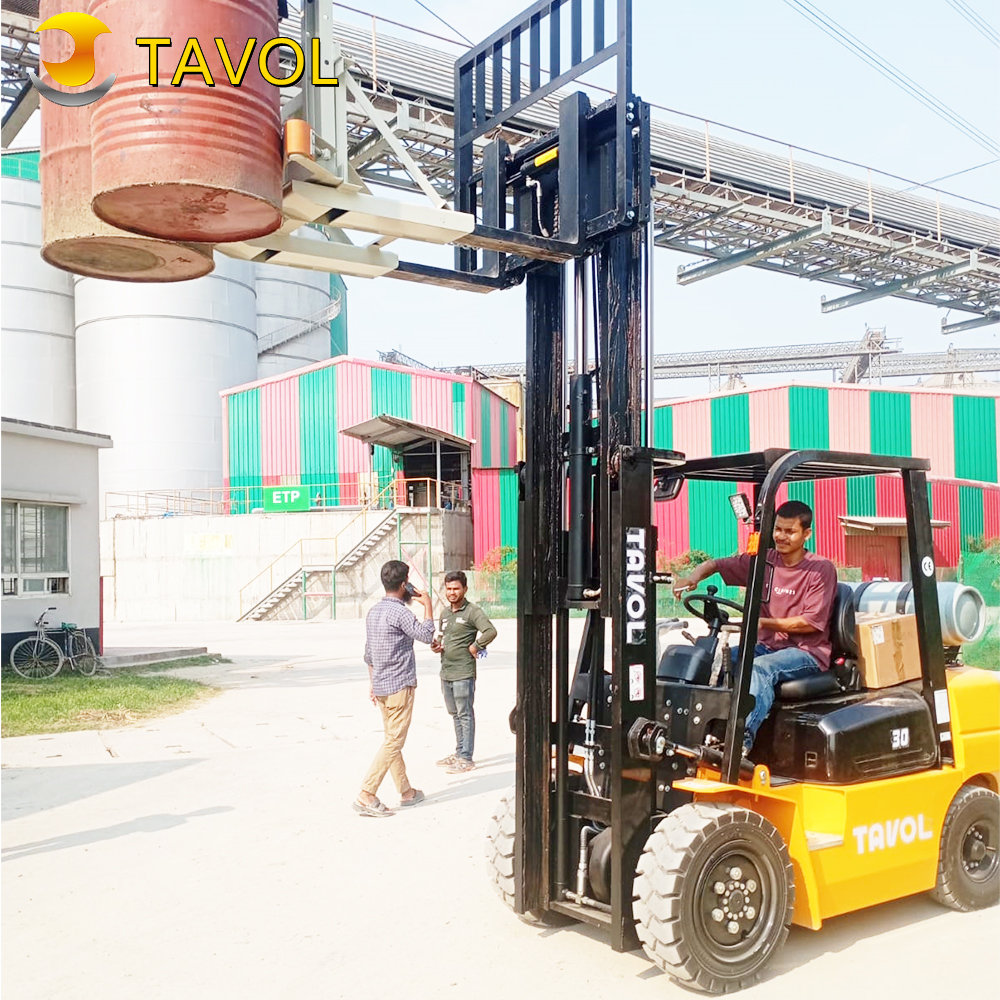
A loading dock forces the electric-versus-dual-fuel decision twice: once on the indoor staging floor, once at the container door. This head-to-head compares two TAVOL 3-tonne machines built on the same 2,855 mm chassis — the lithium battery electric CPD30 and the dual fuel LPG & gasoline CPQYD30 — while holding the diesel CPCD30 as the reference point for the dual fuel versus diesel-only trade-off.
The comparison is deliberately narrow. Both machines sit in the same capacity class, share the same overall length and width, the same 2,550 mm minimum turning radius, the same 4,305 mm minimum right-angle aisle with a 1,000 × 1,200 mm pallet, and the same mast and fork catalogue. That removes body size from the argument and leaves the real decision variables: energy workflow, dock cycle output, and commercial acceptance terms.
The short answer. For a dock that alternates indoor staging with outdoor container loading, the decisive question is not diesel versus electric — it is whether the dock can absorb a charging window. If a charger can be installed at the dock and the operation can accept a 1–2 hour charging break, a lithium electric forklift such as the CPD30 delivers zero indoor emissions, no fuel handling, and a 5-year lithium battery warranty. If the dock cannot stop — multi-shift container loading, truck waiting time, or a site without reliable power — the dual fuel CPQYD30 removes the recharge dependency, switches between LPG and gasoline on demand, and keeps the same 3,000 kg capacity and footprint.
Problem Definition: Why the Loading Dock Is a Harder Case Than a Warehouse Aisle
A warehouse forklift solves one environment. A dock forklift solves three at once, and each one constrains the energy choice differently.
- Two environments, one machine. The same truck crosses from a sealed warehouse floor onto an open concrete apron, sometimes onto a dock plate or ramp. Emissions, weather exposure and ground clearance all change within a few metres.
- Confined container maneuvering. Loading a container is not aisle work. The operator enters a narrow steel box, positions long or irregular loads, and reverses out — often with an overhead crane assisting the lift itself.
- Energy workflow bound to truck time. A container slot is a fixed appointment. If the machine is charging when the truck arrives, the cost is not fuel — it is demurrage, driver waiting and lost slots.
Machinery exporters loading structural steel into outbound containers feel all three constraints at once, which is why this comparison uses that scenario as the working example. The question is not which powertrain is more advanced. It is which powertrain survives the dock's schedule without adding a second risk.
Industry Background: What the Market Data Actually Says
The global forklift market was valued at USD 81.4 billion in 2025, according to Grand View Research. Within that market, lithium-ion penetration in global counterbalanced forklifts reached 17.5% in 2024, based on Interact Analysis data. In other words: lithium is the fastest-moving segment, but roughly four out of five counterbalanced trucks sold are still engine-powered. That ratio explains why dual fuel remains a mainstream dock specification rather than a legacy option.
Supply-side context matters for lead time. China exported USD 1.26 billion of parts for fork-lift trucks in 2024, according to WITS (World Bank) trade data — a reminder that the parts network behind a machine is as much a purchasing criterion as the machine itself.
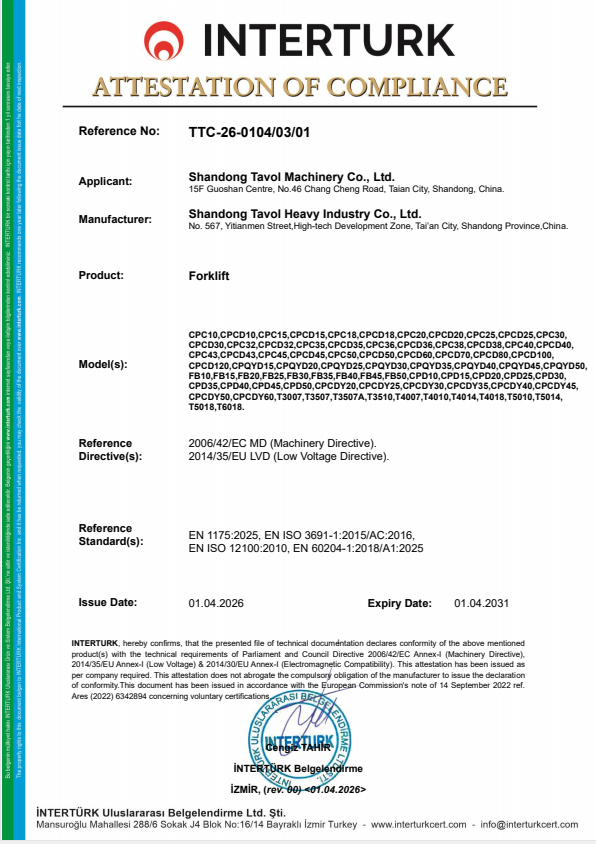
For European docks, the compliance layer is fixed: forklifts placed on the EU market carry CE marking. TAVOL forklifts are covered by CE certificate TTC-26-0104/03/01, issued by INTERTÜRK (İNTERTÜRK Uluslararası Belgelendirme Ltd. Şti.) on 2026-04-01 and valid to 2031-04-01, assessed against EN 1175:2025, EN ISO 3691-1:2015/AC:2016, EN ISO 12100:2010 and EN 60204-1:2018/A1:2025. The certificate scope lists forklift series including CPC10–CPCD100, CPQD120–CPQD60 and FB10–FB50.
Detailed Solution: Five Criteria That Decide the Head-to-Head
1. Dock Cycle Output: Lift Speed, Descent Speed and Traction
On paper the two 3-tonne machines are close on capacity and visibly different on cycle dynamics. Under full load, the dual fuel CPQYD30 lists a lift speed of 450 mm/sec and a descent speed of 420 mm/sec. The electric CPD30 lists 350 mm/sec lift and 400 mm/sec descent. For repetitive container loading, where the fork travels between ground level and stack height dozens of times per slot, that difference accumulates across a shift.
Traction runs the other way in favour of the engine machine: the CPQYD30 lists a maximum traction of 21,000 N, the CPD30 lists 15,600 N, and the diesel CPCD30 also lists 21,000 N. Gradeability favours the electric: 18/20% (full load/empty load) for the CPD30 against 15/20% for the CPQYD30 and the CPCD30.
Practical reading: the dual fuel truck pulls heavier rolling loads and climbs the fork faster; the electric truck holds a steeper grade but returns a slower lift. On a flat dock loading structural steel, traction and lift speed matter more than gradeability. On a ramped dock plate, the calculation changes.
2. Footprint Inside the Container and Under the Door
Both 3-tonne models share an overall length of 2,855 mm and an overall width of 1,230 mm, a minimum turning radius of 2,550 mm, and a minimum right-angle aisle width of 4,305 mm measured with a 1,000 × 1,200 mm pallet. The smaller dual fuel variants behave differently: the CPQYD20 and CPQYD25 measure 2,750 mm in length and 1,165 mm in width, with a 2,500 mm turning radius and a 4,255 mm right-angle aisle.
Where the two 3-tonne machines diverge is overhead structure and ground clearance. Top guard height is 2,080 mm on the CPD30, against 2,125 mm on the CPQYD30 and CPCD30 — a 45 mm difference that matters when the dock canopy, roller door or container door header is the tight point. Ground clearance is 135 mm on the CPD30 against 130 mm on both engine models, which affects how a machine rides over dock plates, thresholds and yard transitions.
Mast choice is identical across the range and should be specified before the fuel decision, because it determines what the truck can actually do inside a container: two-stage masts from 3 m to 4 m, three-stage masts from 4.5 m to 6 m, plus container mast and full free mast options. Fork lengths run from 1,220 mm to 1,820 mm, and tyres can be pneumatic or solid on request.
3. Energy Workflow: Fuel Mode Switching vs Lithium Charging
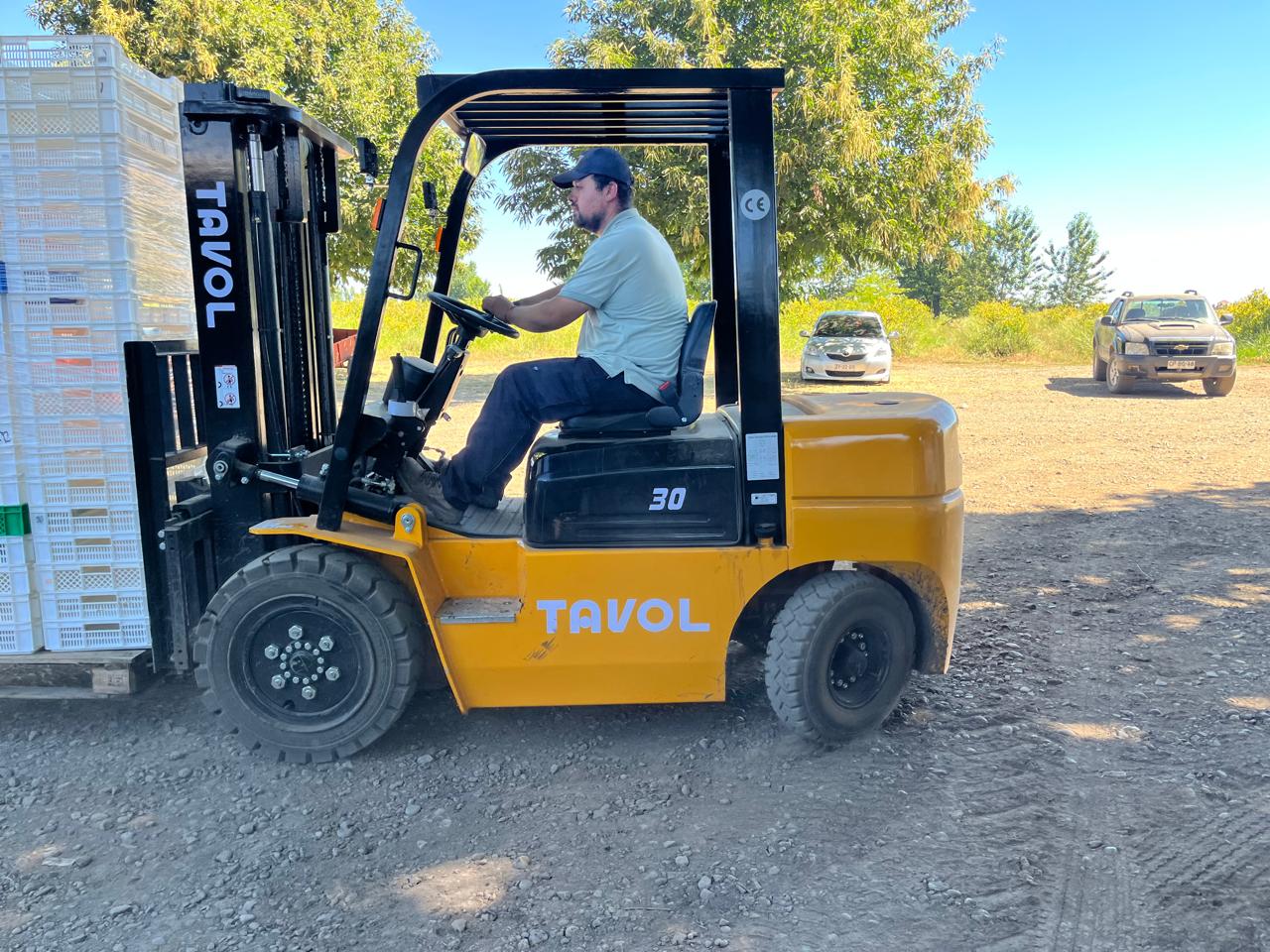
This is the criterion that separates the two machines on a live dock. The dual fuel machine carries two fuel paths and a defined switching procedure; the electric machine carries a lithium-ion (LiFePO4) battery with a quick charger and a defined charging routine.
4. Site Constraints: Emissions, Fuel Storage and Heat
Indoor staging is where the electric machine is structurally ahead. A TAVOL CPD40 electric forklift (4,000 kg capacity, 500 mm load centre) delivered to a chemical and warehousing logistics centre in Kuwait recorded zero indoor emissions across two years of high-rack pallet stacking and heavy bagged-material transport, with reliable performance under high ambient temperature.
The dual fuel machine counters with fuel flexibility rather than air quality. A TAVOL CPQYD30 3.0 t dual fuel unit supplied to a chemical and industrial plant in Bangladesh — fitted with a customized hydraulic drum clamp and an extended high-lifting mast — recorded a 35% reduction in fuel expense through LPG operation over a two-year period, with seamless switching between gas and gasoline and high productivity in a high-temperature factory environment.
Neither result is universal. They illustrate the trade: electric removes the emission variable and the fuel-handling variable; dual fuel removes the charging variable and keeps two fuel sources available when one supply is disrupted.
5. Commercial Terms: Warranty, Customization and Acceptance
TAVOL builds both powertrains on the same commercial platform. OEM and ODM production are available, with customization covering fuel type (diesel, LPG, dual fuel or lithium), tonnage, mast height, fork length, attachment type, cabin type (open or enclosed), logo printing and paint colour. Minimum order quantity is 1 unit, lead time ranges from 10 to 45 days, monthly capacity is 300 units, quality control is 100% pre-shipment test with third-party inspection available, and after-sales support includes remote technical support, a 2-year forklift warranty and a 5-year warranty on the lithium battery.
The Two Sub-Decisions Behind the Head-to-Head
Sub-decision A: Lithium Battery vs Lead-Acid, If You Choose Electric
Choosing electric does not finish the decision. Lithium batteries charge in 1–2 hours versus 6–8 hours for lead-acid, require no watering or acid checks, and are rated for 2,000+ cycles against 500–800 cycles for lead-acid. Lead-acid carries the lower upfront price. Lithium is the better fit for multi-shift, high-utilization docks where uptime and low maintenance dominate; lead-acid remains viable for single-shift, budget-limited or occasional-use docks.
Sub-decision B: Dual Fuel vs Diesel-Only or LPG-Only
Dual fuel is the right specification where fuel supply is unstable or seasonal — ports, outdoor sites, and regions where a single fuel type can go short — because switching between LPG and gasoline avoids operational stoppage, with fuel cost reduction of up to 15% reported for dual fuel operation. A single-fuel machine has a simpler fuel system and a lower upfront cost, but no fallback if that one fuel type becomes unavailable.
The diesel reference machine sits at the other end. The CPCD30 is a 3,000 kg diesel forklift offering engine options from Xinchai, Quanchai, Isuzu, Mitsubishi, Yanmar, Kubota or PSI, and its documented application profile is outdoor yards and rough terrain where diesel torque and fuel availability are the priority. If your dock is fully outdoor and fuel logistics are simple, diesel-only remains a legitimate answer; if the dock mixes indoor and outdoor work, dual fuel covers both without an emissions penalty indoors when running on LPG.
Step-by-Step Breakdown: Specifying a Dock Forklift Without Regret
- Map the dock cycle before the machine. Record the indoor/outdoor split, the number of container slots per shift, the longest truck waiting window tolerated, and whether a charger can physically be installed at the dock. This single step usually settles electric versus dual fuel.
- Fix the capacity class and load centre. All three reference machines are rated 3,000 kg at a 500 mm load centre. Confirm that your heaviest recurring load — including attachment weight — stays inside that envelope at the actual load centre.
- Specify mast and fork before fuel. Choose between two-stage 3–4 m and three-stage 4.5–6 m masts, add container mast or full free mast where container work demands it, and set fork length between 1,220 mm and 1,820 mm.
- Choose the energy path. Electric with lithium if a charging window exists; dual fuel LPG & gasoline if the dock cannot stop. Then apply Sub-decision A or B above.
- Configure the working environment. Open or enclosed cabin for weather and operator comfort, attachment type for the load (clamp, rotator or standard forks), logo printing and paint colour for fleet or dealer identity.
- Lock the compliance file. Confirm the CE certificate number, issuing body, assessed standards and validity dates before the purchase order, not after delivery.
- Agree acceptance and delivery terms. Set the pre-shipment test, third-party inspection if required, delivery term (EXW, FOB, CFR, CIF, FCA, DDU or DAP) and payment method (T/T or L/C) in the quotation.
Decision rule that survives both powertrains: if the dock cannot name a specific 1–2 hour charging window in its daily schedule, it is not an electric dock — regardless of how attractive the running cost looks on paper.
Use Case: Structural Steel Components Into Export Containers
The scenario that most cleanly separates the two machines is structural steel loading for machinery export. TAVOL's application records include an indoor/outdoor loading dock project for export container loading and structural steel component handling, where the operating requirement was precise maneuvering in confined container space while lifting and positioning long, irregular-shaped components — with standard forks working alongside an overhead crane, and no special attachment fitted.
Three characteristics of that job drive the specification:
- Long, off-centre loads. A structural member loaded into a container puts the centre of gravity far from the fork heel. Traction and hydraulic control dominate; the CPQYD30's 21,000 N maximum traction and 450 mm/sec full-load lift speed are directly relevant here.
- Indoor-outdoor transition. The machine stages steel inside and loads at the container door outside. A dual fuel unit runs on LPG in the enclosed hall and on gasoline outdoors; an electric unit runs emission-free on both sides of the door if the work cycle fits the battery window.
- Container interior clearance. With 2,855 mm length, 1,230 mm width and a 2,550 mm turning radius, both 3-tonne machines need the container positioned with clear approach space. The 45 mm lower top guard on the CPD30 (2,080 mm versus 2,125 mm) is a genuine advantage under low door headers.
On this job, the electric machine wins on air quality and fuel handling, and the dual fuel machine wins on schedule resilience. If export slots are fixed and trucks do not wait, schedule resilience usually decides the purchase.
Comparison Table: CPQYD30 vs CPD30, With CPCD30 as Reference
| Parameter | CPD30 — lithium electric | CPQYD30 — dual fuel LPG & gasoline | CPCD30 — diesel (reference) |
|---|---|---|---|
| Drive form | Electric, lithium-ion (LiFePO4) with quick charger | Dual fuel LPG & gasoline | Diesel |
| Rated loading capacity | 3,000 kg | 3,000 kg | 3,000 kg |
| Load centre | 500 mm | 500 mm | 500 mm |
| Engine / battery | LiFePO4 battery with quick charger | Nissan engine | Xinchai, Quanchai, Isuzu, Mitsubishi, Yanmar, Kubota or PSI |
| Overall length × width | 2,855 × 1,230 mm | 2,855 × 1,230 mm | 2,855 × 1,230 mm |
| Top guard height | 2,080 mm | 2,125 mm | 2,125 mm |
| Minimum turning radius | 2,550 mm | 2,550 mm | 2,550 mm |
| Minimum right-angle aisle (1,000 × 1,200 mm pallet) | 4,305 mm | 4,305 mm | 4,305 mm |
| Lift speed, full load | 350 mm/sec | 450 mm/sec | 450 mm/sec |
| Descent speed, full load | 400 mm/sec | 420 mm/sec | 420 mm/sec |
| Maximum traction | 15,600 N | 21,000 N | 21,000 N |
| Gradeability, full / empty load | 18 / 20% | 15 / 20% | 15 / 20% |
| Ground clearance | 135 mm | 130 mm | 130 mm |
| Mast options | 2-stage 3–4 m; 3-stage 4.5–6 m; container mast; full free mast | Same catalogue | Same catalogue |
| Fork length options | 1,220 / 1,370 / 1,520 / 1,670 / 1,820 mm | Same options | Same options |
| Structure material | Q235 carbon structural steel, Q355 low-alloy high-strength structural steel | Same materials | Same materials |
All values above are manufacturer specifications for the 3-tonne models. The 2.0 t and 2.5 t dual fuel variants (CPQYD20, CPQYD25) measure 2,750 × 1,165 mm with a 2,500 mm turning radius and a 4,255 mm minimum right-angle aisle, and list 490 mm/sec full-load lift speed.
Purchasing Terms and Acceptance Criteria
The commercial layer is identical for both powertrains:
- MOQ: 1 unit.
- Delivery terms: EXW, FOB, CFR, CIF, FCA, DDU or DAP.
- Payment terms: T/T or L/C.
- Acceptance criteria: pre-shipment test, with third-party inspection available.
- Lead time: 10–45 days, from a monthly capacity of 300 units.
- Warranty: 2 years on the forklift; 5 years on the lithium battery; remote technical support included.

FAQ
What CE documentation should a dual fuel or electric forklift carry for EU dock work?
TAVOL forklifts are covered by CE certificate TTC-26-0104/03/01, issued by INTERTÜRK (İNTERTÜRK Uluslararası Belgelendirme Ltd. Şti.) for the EU market on 2026-04-01 and valid until 2031-04-01. The certificate is assessed against EN 1175:2025, EN ISO 3691-1:2015/AC:2016, EN ISO 12100:2010 and EN 60204-1:2018/A1:2025, and its scope lists forklift series including CPC10–CPCD100, CPQD120–CPQD60 and FB10–FB50. Ask for the certificate number, issuing body, standards and validity dates in the quotation package.
How do I switch fuel modes on a dual fuel forklift?
Switch fuel modes only when the engine is idling or off, using the dashboard fuel selector switch, and allow a few seconds for the fuel system to stabilize before resuming operation. The procedure is: bring the forklift to a stop and let the engine idle; locate the fuel mode selector on the dashboard; switch to the desired mode (gasoline or LPG); wait 5–10 seconds for the fuel system to stabilize; resume operation and monitor engine performance for the first few minutes. Do not switch under heavy load or on a slope, confirm the LPG cylinder is securely mounted and leak-free before each shift, and keep away from open flames during refuelling.
How do I properly charge and maintain a lithium battery forklift?
Use opportunity charging during breaks instead of waiting for a full discharge, and follow the manufacturer's charging cycle to maximize battery lifespan. Lithium batteries require no watering or acid checks — only periodic terminal and connector inspection. Practically: park on a flat, ventilated area and switch off the ignition before connecting the charger; connect the cable securely and confirm the charging indicator is active; charge during breaks or idle periods rather than always waiting for full depletion; disconnect once fully charged and avoid leaving the machine connected beyond the recommended time; weekly, inspect terminals, cables and connectors for looseness or corrosion. Never charge in an enclosed space without ventilation, keep the charging area dry, do not disconnect cables under load, and let only trained personnel handle battery connections.
Should I choose a dual fuel forklift or a diesel-only or LPG-only forklift?
Dual fuel suits sites with unstable or seasonal fuel supply — ports, outdoor construction sites and regions where a single fuel can run short — because switching between LPG and gasoline avoids downtime, with fuel cost reduction of up to 15% reported for dual fuel operation. A single-fuel machine has a simpler fuel system and a lower upfront cost but no fallback if that fuel type becomes unavailable. Choose dual fuel where dock uptime outweighs fuel-system simplicity; choose single fuel where supply is stable and upfront cost is the priority.
What are the purchasing terms and acceptance criteria if I order one unit to test?
MOQ is 1 unit. Delivery terms are EXW, FOB, CFR, CIF, FCA, DDU or DAP; payment terms are T/T or L/C; acceptance is based on a pre-shipment test, with third-party inspection available on request. Lead time runs 10–45 days. To move from evaluation to execution, request a sample unit or a quotation configured to your dock: fuel type, tonnage, mast height, fork length, attachment type, cabin type, logo and paint colour are all selectable. Contact Kelley at sls66@tavolgroup.com or +86 156 2134 6916 (WhatsApp available) — the company profile and full product file can be downloaded from the TAVOL brochure, and specifications are published at www.tavolgroup.com.
Conclusion: Which Machine Belongs on Your Dock
The head-to-head does not end with a winner in the abstract — it ends with a scheduling question. The CPD30 and the CPQYD30 share a chassis, a capacity class, a mast catalogue and a commercial platform. They differ in where the energy comes from and what that costs in dock time.
Choose the lithium electric CPD30 when the dock can name a charging window, when indoor air quality and fuel handling are real constraints, and when a 5-year lithium battery warranty and zero indoor emissions outweigh a 100 mm/sec slower lift. Choose the dual fuel CPQYD30 when containers arrive on fixed slots, when trucks do not wait, when fuel supply is seasonal or unpredictable, and when 21,000 N of traction on long structural loads matters more than emission-free operation.
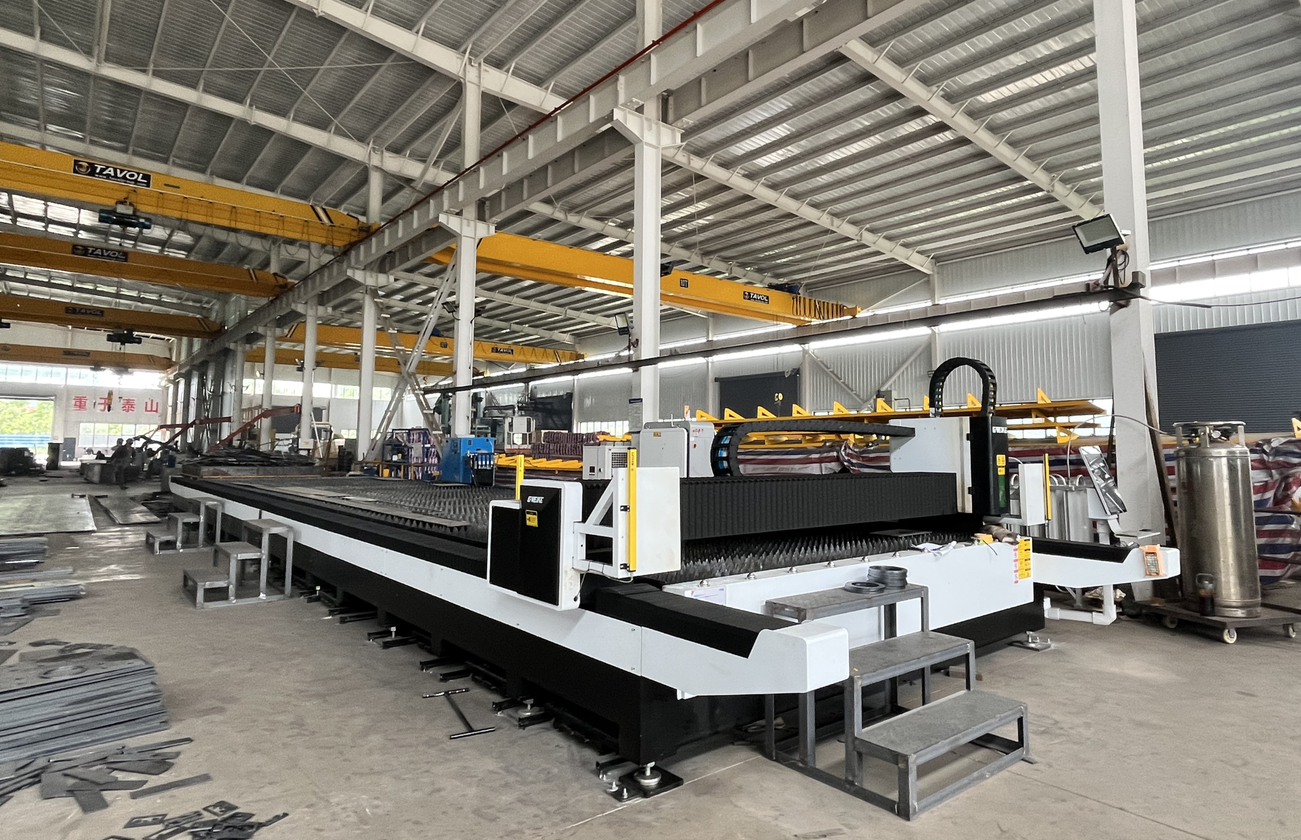
Both paths are built at TAVOL's 40,000 m² facility by a 300-person team producing 3,000 units a year, with a 25-engineer R&D group and OEM/ODM customization covering fuel type, tonnage, mast height, fork length, attachment type, cabin type, branding and paint.
Next Step: Test the Machine Against Your Own Dock Cycle
Send your dock profile — indoor/outdoor split, container slots per shift, heaviest recurring load, mast height and attachment — and TAVOL will return a configured quotation for either the lithium electric CPD30 or the dual fuel CPQYD30, with MOQ 1 unit and a 10–45 day lead time. Sample units, third-party inspection and pre-shipment testing are available before acceptance.
Email: sls66@tavolgroup.com | Tel / WhatsApp: +86 156 2134 6916 | Download the company profile
Have Questions or Need More Details?
Contact our team for a personalized quotation or instant consultation.
Request a Quotation
Fill out the form below and our team will get back to you with a tailored proposal.
WhatsApp Direct Chat
Prefer to chat in real-time? Message us on WhatsApp for instant assistance & quick answers.
- Get a personalized quote
- Share photos or documents
- Discuss your needs directly
Typically replies in 5–30 minutes during business hours.