
Overloaded Material Handling Forklift? On-Mast Weighing Explained
An overloaded material handling forklift is usually a data failure before it becomes a mechanical one. When nobody knows the true weight of a pallet until it reaches a weighbridge, an inventory count or a disputed freight invoice, the last place left to check the load is the forklift itself. On-mast load weighing, built from an integrated load cell and a digital display mounted on the mast, gives the operator a real-time weight reading during lifting and transport, together with an overload alert and a calibration routine that makes the number usable for billing and inventory.
This guide is written for buyers who have moved past the idea stage. They have accepted that weight has to be controlled at the point of lift, and they now have to specify that capability on a real truck, train operators on it, and keep it credible across a fleet for years. The sections below cover the overload problem, the weighing specification, the diesel, dual fuel LPG and gasoline, and electric platforms that can carry it, and the long-term operating routine that keeps readings defensible in an audit.
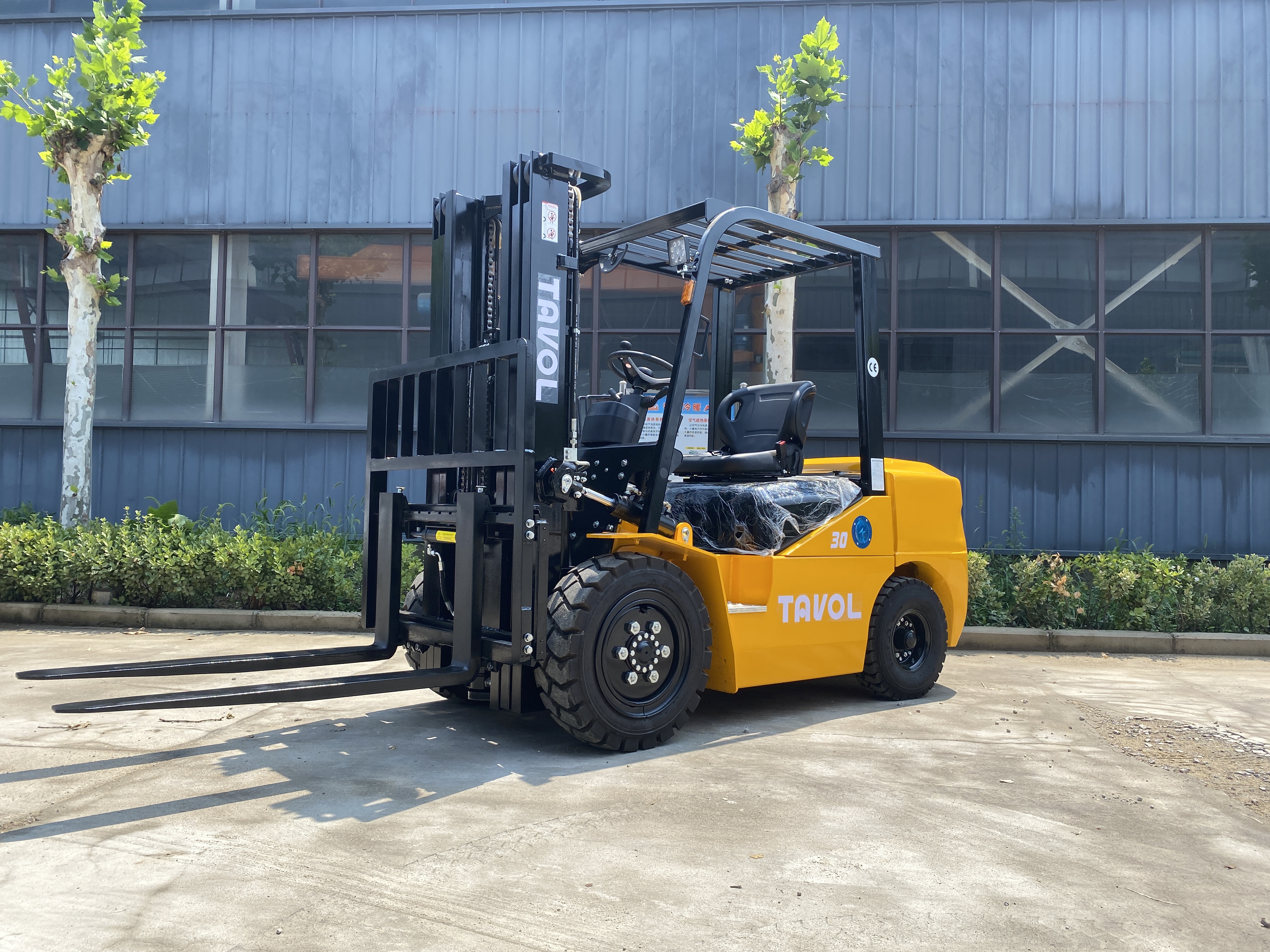
What Counts as an Overloaded Material Handling Forklift
An overloaded forklift is one whose actual load exceeds its rated capacity at the actual load center on the forks. TAVOL's counterbalance models are rated at a 500 mm load center, which means the 3000 kg rating on CPCD30 diesel, CPQYD30 dual fuel and CPD30 electric applies at 500 mm from the fork face, not at any distance the load happens to sit.
Four conditions produce overloads in weight-sensitive operations, and only the first one is obvious:
- Load center drift. Long, bulky or irregular loads move the effective center of gravity forward, so a load that is nominally within the rated capacity is no longer within it in the geometry that matters.
- Attachment weight and reach. Clamps, rotators and other hydraulic attachments add mass ahead of the carriage, and that mass is carried before the first pallet is touched.
- Transport with the load raised. A load that is acceptable at lift height can become a stability problem during travel, which is why overloading during transport is a separate risk from overloading at the moment of lift.
- Unverified paperwork. A truck that is never weighed in operation is also a truck whose loads are never confirmed, so weight-based inventory and freight billing run on nominal figures that cannot be defended when a customer disputes them.
The practical definition for a warehouse manager is therefore narrower than the capacity plate: an overload is any lift or transport movement where the actual weight on the forks, at the actual load center, exceeds the rated capacity for that configuration. Without a weight reading, that condition can only be discovered after the fact, through damaged racking, deformed forks, tyre and mast wear, or an invoice argument.
Why Weight Data Disappears Between the Dock and the Invoice
Weight-based operations rarely fail because the team does not care about weight. They fail because weight is captured somewhere other than the forklift. In a typical yard, weight is recorded at three points, and none of them is the fork: on an incoming weighbridge, from the nominal figure printed on packaging or the packing list, and on the outgoing commercial invoice. The gap between those three numbers is where disputes live.
The wider context makes that gap harder to close. Grand View Research valued the global forklift market at USD 81.4 billion in 2025, and Interact Analysis reported lithium-ion penetration in counterbalanced forklifts at 17.5% in 2024. More trucks and more drive types mean more mixed fleets, more operators rotating between machines, and more chances for a weight assumption made on one truck to be applied on another.
Two operational habits make the problem worse. First, weighing is treated as a separate task, so the truck queues for a weighbridge that may be a few hundred metres away and is often busy with road vehicles. Second, weight is recorded per shipment while risk is created per lift. The result is a warehouse that can quote a total tonnage at the end of the month but cannot say which pallet, handled by which truck, at which mast height, was closest to the limit.
The Solution: Integrated Load Cell and Digital Display on the Mast
On-mast load weighing measures the load while it is on the forks and shows the weight to the operator in real time. The configuration specified for weight-based operations is an integrated load cell combined with a digital display unit mounted on the mast: the truck weighs the load during lifting and transport, and no separate weighbridge trip is required to obtain the figure.
That single change moves weight control from a downstream checkpoint to the moment of decision. The operator lifts, reads the weight, and only then commits to the stack, the trailer or the transfer. In warehousing with weight-based inventory, the same reading becomes the record used for stock and for customer billing. In logistics and freight billing, it becomes the basis of the charge instead of an estimate reconciled weeks later. In manufacturing plants, it becomes the input that stops an overweight bundle from being built in the first place.
The specification attached to this configuration has three parts that should appear in any purchase order: an electronic weighing scale attachment with an integrated load cell, a digital display unit positioned on the mast, and a weighing accuracy calibration routine supported by an overload alert function. The alert is the operational trigger; the calibration is what keeps the trigger meaningful after the first year.
Specification Checklist for a Weighing-Equipped Forklift
A weighing configuration is only as good as the truck underneath it. The following points are the ones that decide whether the readings stay consistent across a fleet, and each maps to a documented option on TAVOL's counterbalance range.
- Rated capacity class. Diesel models run from CPCD20 at 2000 kg to CPCD40 at 4000 kg; dual fuel LPG and gasoline models run from CPQYD20 at 2000 kg to CPQYD35 at 3500 kg; electric models cover CPD30 at 3000 kg, CPD35 at 3500 kg and CPD40 at 4000 kg.
- Load center. All of these models are rated at a 500 mm load center, which is the figure to check against your actual pallet and attachment geometry.
- Mast. Two-stage masts are available at 3 m, 3.5 m and 4 m; three-stage masts at 4.5 m, 5 m, 5.5 m and 6 m. Container masts and full free masts can be specified, which matters when weighing is combined with double-stacked container loading.
- Forks. Fork length can be selected from 1220 mm, 1370 mm, 1520 mm, 1670 mm or 1820 mm, so the load center assumption can be matched to the load rather than forced onto it.
- Tyres. Pneumatic tyres are standard, with solid tyres available on request for yard and indoor combinations where puncture risk is a concern.
- Structure. The trucks are built from Q235 carbon structural steel and Q355 low-alloy high-strength structural steel, with a reinforced frame design for high structural strength and impact resistance. That matters because overload damage is cumulative and shows up in the frame before it shows up in the paperwork.
- Weighing hardware. Electronic weighing scale attachment with integrated load cell, plus a digital display unit on the mast.
- Calibration and alert. Weighing accuracy calibration and an overload alert function should be named explicitly in the specification, not assumed.
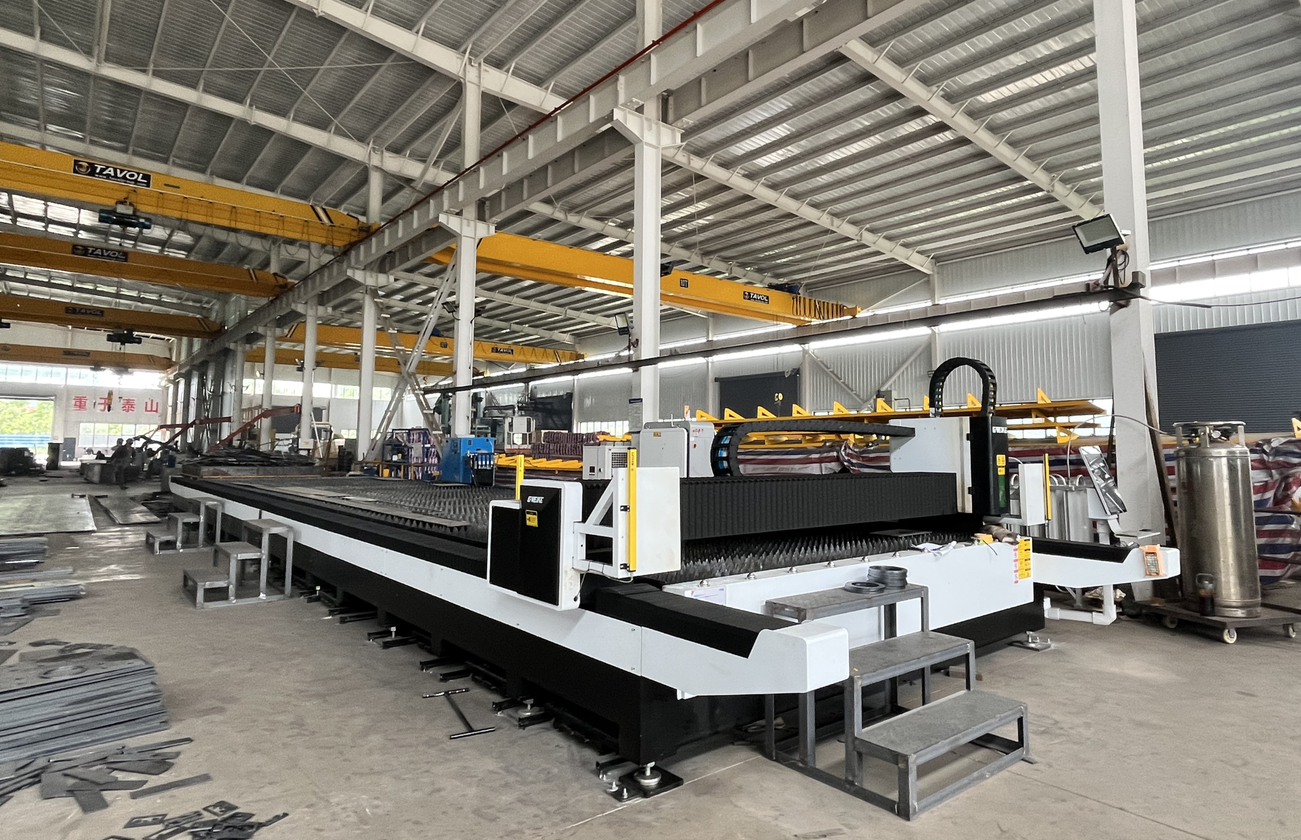
Capacity and Model Options from 2t to 4t
Capacity selection should start from the heaviest routine lift, not the average load, and then be checked against the mast and fork combination that lift actually needs. The table below lists the documented dimensions and lift speeds for the models most often specified with on-mast weighing.
| Model | Drive | Rated capacity | L × W (mm) | Top guard (mm) | Lift speed, full load |
|---|---|---|---|---|---|
| CPCD20 | Diesel | 2000 kg | 2750 × 1165 | 2105 | 490 mm/s |
| CPCD30 | Diesel | 3000 kg | 2855 × 1230 | 2125 | 450 mm/s |
| CPCD35 | Diesel | 3500 kg | 2855 × 1230 | 2125 | 450 mm/s |
| CPCD40 | Diesel | 4000 kg | 2855 × 1330 | 2080 | 460 mm/s |
| CPQYD20 | Dual fuel LPG & gasoline | 2000 kg | 2750 × 1165 | 2105 | 490 mm/s |
| CPQYD30 | Dual fuel LPG & gasoline | 3000 kg | 2855 × 1230 | 2125 | 450 mm/s |
| CPD30 | Electric (LiFePO4) | 3000 kg | 2855 × 1230 | 2080 | 350 mm/s |
| CPD40 | Electric (LiFePO4) | 4000 kg | 2855 × 1230 | 2125 | 320 mm/s |
Two practical notes follow from this table. A 2000 kg diesel or dual fuel model at 2750 mm overall length and 1165 mm overall width is the compact option for confined aisles, and that manoeuvrability is often worth more than a higher capacity class that never gets used. Conversely, a 4000 kg model widens to 1330 mm overall width on CPCD40, which changes aisle planning as well as capacity. The weighing decision should be made alongside those dimensions, not after them.
Diesel, Dual Fuel LPG and Gasoline, or Electric: Which Platform Carries the Scale
The weighing hardware is largely platform-independent; the environment is not. Diesel remains the default for outdoor yards and rough terrain, where engine options including Xinchai, Quanchai, Isuzu, Mitsubishi, Yanmar, Kubota and PSI allow the power unit to be matched to local service capability. Dual fuel LPG and gasoline models, such as the CPQYD range with a Nissan engine, allow the fuel source to be switched according to availability and price, and the documented procedure is to switch only when the engine is idling or off, using the dashboard selector, then allow a few seconds for the fuel system to stabilise before resuming work. Electric models in the CPD range use a lithium-ion (LiFePO4) battery with a quick charger, which suits indoor and cold storage operations where emissions and charging windows shape the shift pattern.
| Decision point | Diesel (CPCD30) | Dual fuel LPG & gasoline (CPQYD30) | Electric lithium (CPD30) |
|---|---|---|---|
| Rated capacity / load center | 3000 kg / 500 mm | 3000 kg / 500 mm | 3000 kg / 500 mm |
| Power source | Diesel engine; options include Xinchai, Quanchai, Isuzu, Mitsubishi, Yanmar, Kubota, PSI | Dual fuel LPG and gasoline; Nissan engine | Lithium-ion (LiFePO4) battery with quick charger |
| Gradeability, full / empty load | 15% / 20% | 15% / 20% | 18% / 20% |
| Lift speed, full load | 450 mm/s | 450 mm/s | 350 mm/s |
| Documented use environment | Outdoor yards, timber and building material sites, rough terrain | Warehousing, food and beverage, manufacturing plants, port and container handling | Indoor warehousing, cold storage and food processing, pharmaceutical and cleanroom facilities |
| Weighing fit | Outdoor shuttles where loads are picked from unweighed stock and must be checked before the trailer is loaded | Sites switching fuel by season that still need a weight record on every lift | Multi-shift indoor operations with dense racking and frequent, small weight decisions |
On running cost, TAVOL's published comparison data states that switching between fuels on a dual fuel truck can reduce fuel cost by up to 15% by avoiding dependency on a single source, and that a lithium truck carries a total cost of ownership 20% to 30% lower than a lead-acid equivalent over five years, with charging time reduced by about 70% and battery lifespan of 2000 or more cycles against 500 to 800 cycles. Those figures belong in the budget case; they do not change the weighing logic, which stays the same on all three platforms.
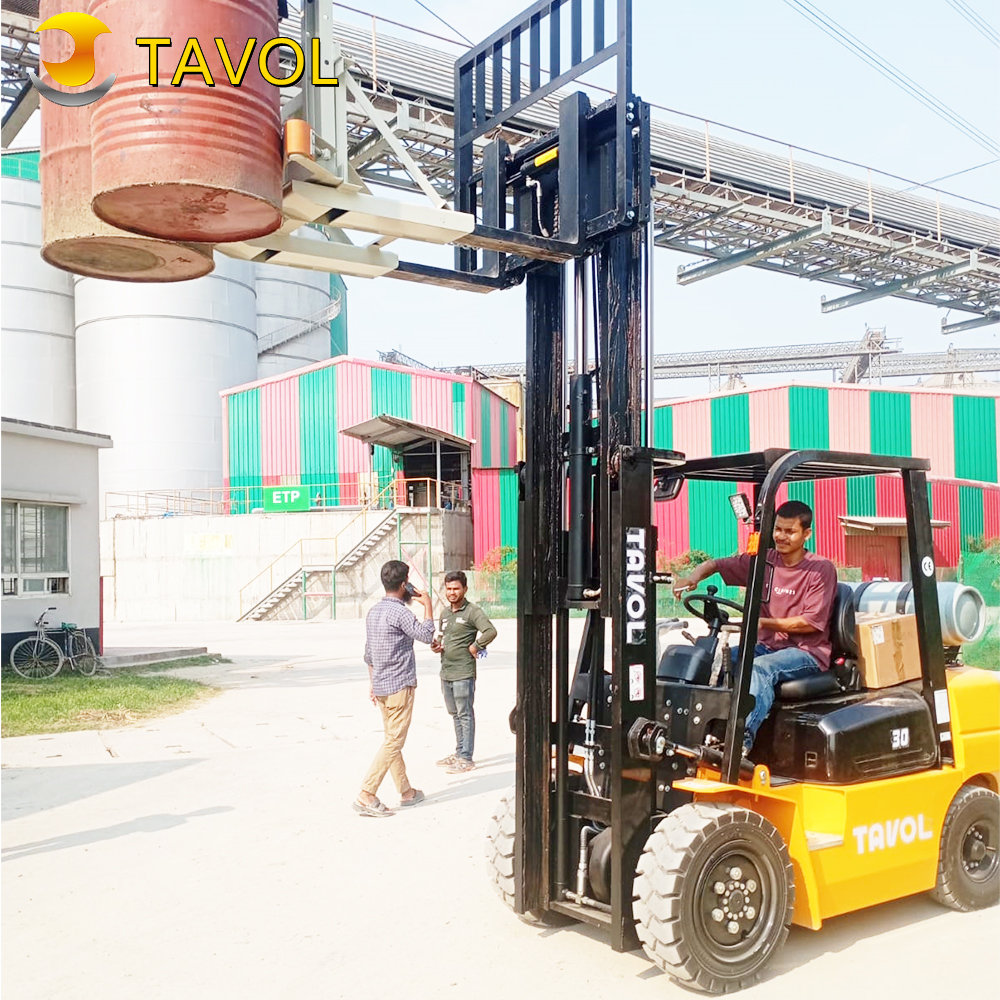
Step-by-Step: Specifying On-Mast Weighing on a Material Handling Forklift
The sequence below keeps the weighing decision tied to the load rather than to the truck brochure. It is the order that avoids the most common failure, which is a well-equipped truck whose capacity was chosen from an average weight.
- Step 1 — Define the unit of weight. Decide whether the system must produce a weight per lift, per pallet, per container or per shipment. On-mast weighing measures the load on the forks, so per-lift is the natural unit; shipment totals are then summed from those readings.
- Step 2 — Fix the load geometry. Record pallet footprint, load length and the attachments used, then convert those into an honest load center. The 500 mm rating on TAVOL models is the reference point, and fork length options from 1220 mm to 1820 mm let the geometry be matched rather than assumed.
- Step 3 — Choose capacity with a defined margin. Start from the heaviest routine lift, add attachment weight, and select the model class from CPCD20 through CPCD40, CPQYD20 through CPQYD35, or CPD30 through CPD40.
- Step 4 — Choose the mast and fork combination. Two-stage 3 m to 4 m for standard stacking; three-stage 4.5 m to 6 m where racking height demands free lift; container or full free mast where the truck also loads containers.
- Step 5 — Select the drive platform. Indoor and cold storage point to electric; outdoor yards and rough terrain point to diesel; sites with unstable or seasonal fuel supply point to dual fuel.
- Step 6 — Write the weighing requirement into the order. Integrated load cell, digital display on the mast, overload alert function, and weighing accuracy calibration with a written record.
- Step 7 — Define acceptance. Pre-shipment test is the standard acceptance criterion, and the weighing calibration should be confirmed at that point rather than on arrival.
- Step 8 — Set the operating routine. Pre-shift checks, overload handling rules, and a calibration interval tied to the maintenance schedule rather than to operator complaints.
Use Cases: Where the Weight Reading Earns Its Cost
On-mast weighing pays for itself where the weight of a load changes a decision or a bill. Four settings dominate.
Warehousing with weight-based inventory
Where stock is held and valued by weight, a lift-by-lift reading closes the gap between what arrived and what is stored. The operator sees the weight before the pallet goes into the rack, and the record follows the pallet into inventory instead of being reconstructed at month end. This is the scenario TAVOL documents for weight-based inventory operations, alongside grain trading and scrap and recycling weighing, in indoor and outdoor weight-sensitive handling.
Logistics and freight billing
Freight charged by weight is only as accurate as the weight captured. A weighing truck measures the load during lifting and transport, so the billing weight is the weight that was actually handled, not a nominal figure from a packing list. The commercial benefit is not only accuracy: it is the removal of the repeated weighbridge trip from the loading cycle.
Manufacturing plants
In plants handling hardware, building materials, ceramics, glass, chemicals or plastics, the overload risk is created upstream, when a bundle or stillage is assembled. Weighing at the point of lift gives the plant a check on the bundle before it moves, and gives maintenance a record to compare against mast, fork and tyre wear.
Attachment-heavy handling
Paper roll clamps, bale and carton clamps, rotating clamps and tyre clamps all change the weight and geometry of the load. In cold-climate indoor warehouses, the same operation may run with a closed cab for operator protection, which makes an in-cab or mast-mounted display the practical way to read weight without leaving the seat. Whenever an attachment is part of the routine, the weighing specification should be written with the attachment fitted, not with bare forks.
Long-Term Operation: Calibration, Parts Continuity and Fleet Standardization
The first year of a weighing programme is easy. The difficulty is the fourth year, when the display has been knocked, the load cell has been replaced once, and three drivers insist the number is wrong. Three routines prevent that decline.
- A calibration rhythm. Weighing accuracy calibration should be scheduled like any other maintenance task, with a written record per truck. A reading that cannot be traced to a calibration date will not survive a customer dispute.
- A pre-shift check that includes the weighing chain. The documented diesel counterbalance checklist covers fluid levels, tyres, brakes, horn, lights, backup alarm, forks, mast and hydraulic lines before every shift. Adding the display, cabling and load cell mounting to that walk-around takes a minute and catches most failures early.
- A platform that technicians only have to learn once. Standardising on one capacity class and one drive type across a fleet shortens operator training, simplifies spare parts holding, and makes calibration procedures repeatable instead of model-specific.
Shandong Tavol Machinery Co., Ltd. is a Chinese manufacturer of forklifts, cranes and agricultural machinery, founded in 2003 and headquartered at 15F, Guoshan Center, Changcheng Rd, Taian City, Shandong Province, China. The company reports a 40,000 m² factory, 300 employees, annual output of 3000 units and a 25-engineer R&D team, with exports accounting for 70% of sales across more than 120 countries. Because cranes, material handling equipment and agricultural machinery are all researched, developed and manufactured in-house, a distributor manages one spare parts inventory and one technical team rather than three supplier relationships, which is the practical difference between a weighing programme that survives and one that lapses.
Procurement context matters here as well. TAVOL's comparison data positions its diesel counterbalance models 20% to 40% below legacy Western brands at comparable load capacity and lifting height, with spare parts cost around 30% lower, faster delivery and OEM customisation. For a buyer rolling out weighing across a fleet, that difference funds the calibration routine and the operator training that the hardware alone does not provide.
Frequently Asked Questions
Does on-mast weighing meet forklift safety and compliance requirements?
The published reference point in the US market is ANSI/ITSDF B56.1-2020, the safety standard for low-lift and high-lift trucks effective through 2025. On-mast weighing does not replace the rated capacity plate, and it does not replace trained operators. What it does is make the plate rating checkable on every lift, because the operator sees the actual weight against a known capacity at a known load center. Compliance value comes from the documentation around the system: a weighing accuracy calibration record per truck, a written overload alert procedure, and a pre-shift check that includes the display and load cell mounting.
Can on-mast weighing be specified on diesel, dual fuel LPG and gasoline, and electric models?
Yes. The weighing configuration, an integrated load cell plus a digital display unit on the mast, is specified independently of the power source. Diesel coverage runs from CPCD20 at 2000 kg to CPCD40 at 4000 kg, with engine options including Xinchai, Quanchai, Isuzu, Mitsubishi, Yanmar, Kubota and PSI. Dual fuel LPG and gasoline coverage runs from CPQYD20 at 2000 kg to CPQYD35 at 3500 kg with a Nissan engine. Electric coverage runs from CPD30 at 3000 kg to CPD40 at 4000 kg with a lithium-ion (LiFePO4) battery and quick charger. All three families are rated at a 500 mm load center and share the same mast and fork options, so a mixed fleet can run one weighing procedure.
What drives the cost of a weighing-equipped material handling forklift?
Cost is configuration-driven rather than model-driven. The main variables are capacity class, mast type (two-stage 3 m to 4 m against three-stage 4.5 m to 6 m, with container and full free masts as further options), fork length from 1220 mm to 1820 mm, pneumatic or solid tyres, engine brand selection, and the weighing hardware itself, meaning the electronic weighing scale attachment, the display unit and the calibration work. Operating cost then separates the platforms: dual fuel operation can reduce fuel cost by up to 15% through fuel switching, and a lithium truck carries a total cost of ownership 20% to 30% lower than a lead-acid equivalent over five years. Quotations are prepared per configuration, so the specification should be fixed before pricing is compared.
Can we validate one weighing unit before committing a fleet order?
Yes. The minimum order quantity is one unit, which allows a single truck to run as the validation unit for a season before a fleet decision. Acceptance criteria are defined as a pre-shipment test, so the weighing accuracy calibration and the overload alert function are confirmed before the truck leaves the factory rather than after installation. Once the reading is accepted on one unit, the same capacity class, mast, fork length and calibration interval can be replicated across the fleet without re-qualifying the concept.
What is the lead time, and which delivery terms apply?
Lead time is confirmed per order because it depends on the combination of capacity class, mast type, engine option and weighing hardware. Delivery terms include EXW, FOB, CFR, CIF, FCA, DDU and DAP, with payment by T/T or L/C, and TAVOL's comparison data cites faster delivery than legacy Western brands alongside OEM customisation. To move from specification to a scheduled order, send the load details, mast height, fork length, drive platform and weighing requirement to sls66@tavolgroup.com or +86 156 2134 6916, and the configuration and delivery schedule can be confirmed against those inputs.
Conclusion: The Decision Rules That Matter
Overloading is controlled by three decisions, and none of them is made at the weighbridge. The first is to measure at the fork, using an integrated load cell and a digital display on the mast so the weight is known before the lift is committed. The second is to specify capacity from the heaviest routine lift at an honest load center, with attachment weight included and the mast and fork combination written into the order. The third is to treat calibration as a maintenance routine rather than a one-off commissioning step, because an uncalibrated display is worse than no display: it creates confidence without evidence.
Diesel covers outdoor yards and rough terrain, dual fuel LPG and gasoline covers sites where fuel supply shifts, and electric covers indoor and cold storage work; the weighing specification is the same on all three. Choose the platform for the environment, the capacity for the load, and the calibration routine for the years after handover. That combination is what turns a weighing option into a defensible weight record for inventory, freight billing and manufacturing control.
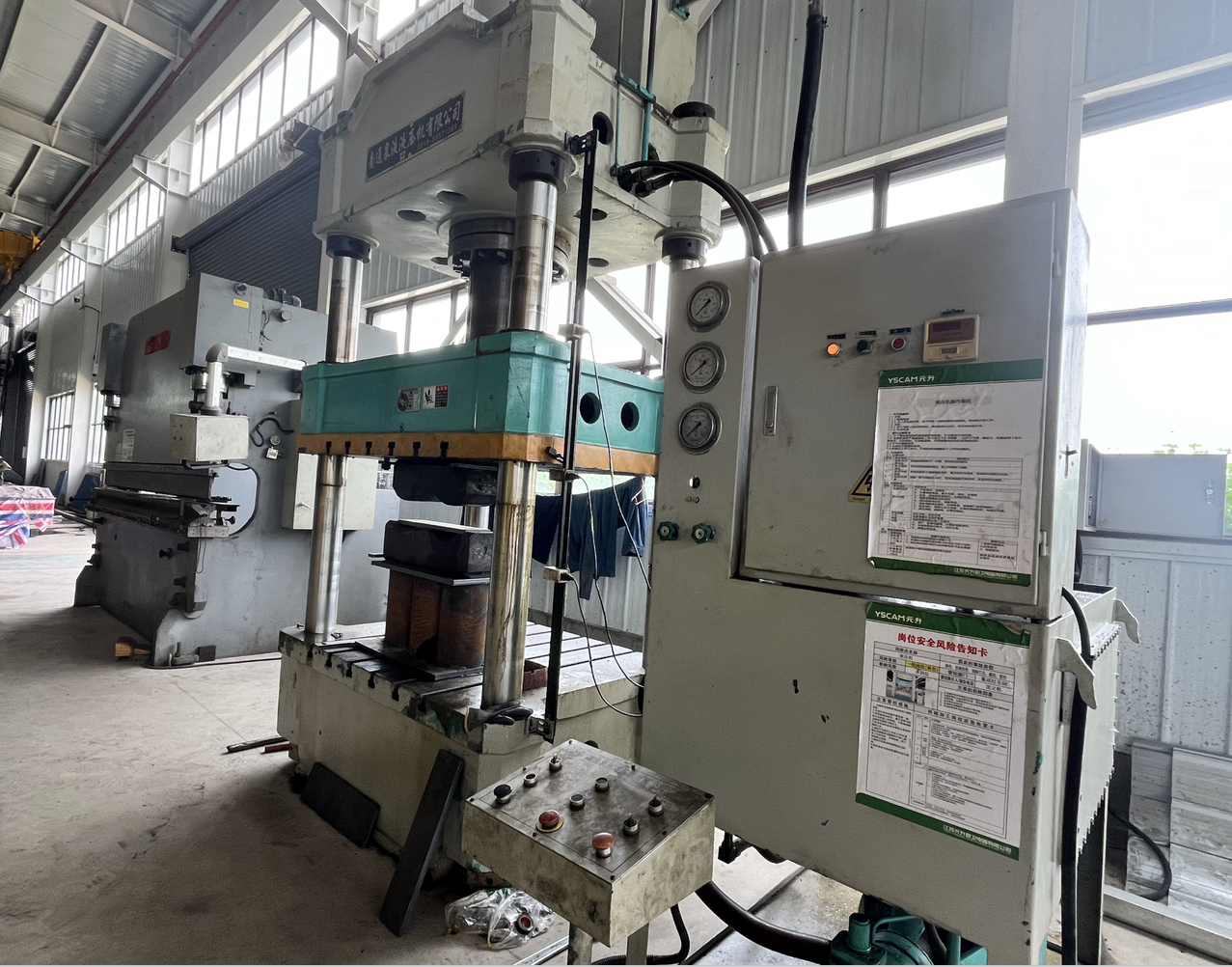

Specify on-mast weighing against your actual loads
Send the pallet footprint, heaviest routine lift, stacking height, indoor or outdoor condition and drive preference. TAVOL will confirm the capacity class, mast, fork length and weighing configuration for a single validation unit or a fleet rollout.
Email: sls66@tavolgroup.com | Tel / WhatsApp: +86 156 2134 6916 | Web: www.tavolgroup.com
Download the company profile and product catalogue: TAVOL Company Profile (PDF)
Shandong Tavol Machinery Co., Ltd. — 15F, Guoshan Center, Changcheng Rd, Taian City, Shandong Province, China.
Have Questions or Need More Details?
Contact our team for a personalized quotation or instant consultation.
Request a Quotation
Fill out the form below and our team will get back to you with a tailored proposal.
WhatsApp Direct Chat
Prefer to chat in real-time? Message us on WhatsApp for instant assistance & quick answers.
- Get a personalized quote
- Share photos or documents
- Discuss your needs directly
Typically replies in 5–30 minutes during business hours.