
Ranked: Four Material Handling Forklift Setups for Weight-Sensitive Yards and Container Loading
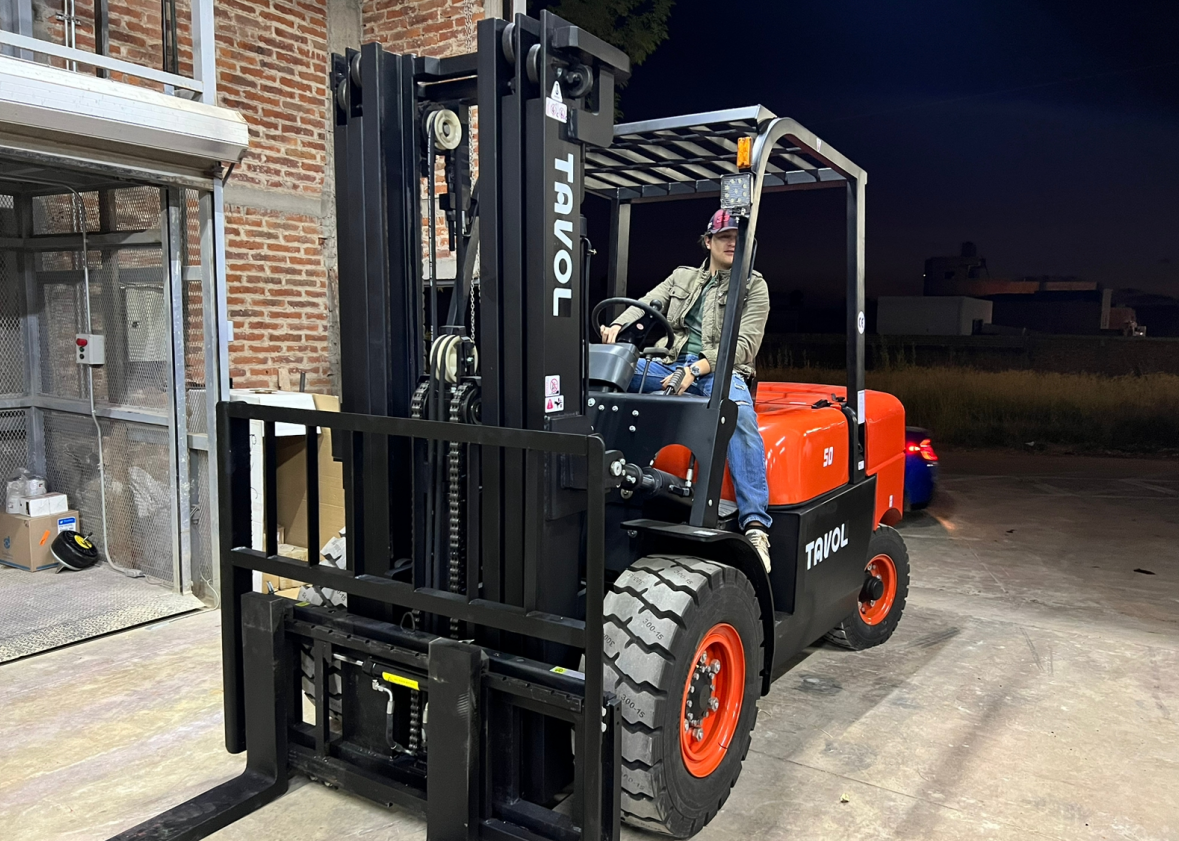
Ranking basis. A material handling forklift is usually shortlisted by brand and tonnage. In a yard where cargo is bought, sold or invoiced by weight, and where the same truck must then place that cargo inside a shipping container, both criteria leave the decisive question open: can this setup produce a weight at the moment of lift, and can it put the load into the box without a second handling step?
The four setups below are ordered by job fit against that question. Rank 1 is the on-mast integrated load cell with digital display, because it changes the data a yard owns rather than only the fuel it burns. Ranks 2 to 4 are the three power options — dual fuel LPG & gasoline, diesel, and electric — ordered by how well each covers weight-sensitive yard work combined with container loading.
Specifications in this ranking come from the TAVOL Forklift range. TAVOL Forklift is the forklift line of Tavol Group and Shandong Tavol Machinery Co., Ltd, a manufacturer established in 2003 in Tai'an, Shandong, China, producing diesel, LPG/gasoline, dual fuel and electric forklifts alongside cranes and agricultural machinery. The ranking itself is a configuration ranking, not a manufacturer award.
Problem definition: the weight is created at the fork and recorded somewhere else
In most weight-sensitive yards the load is weighed after it has already been handled once. That single step creates three costs: a trip to a weighbridge and back, a queue at the bridge, and a second lift that adds handling-damage risk to the same cargo. Billing disputes follow when the buyer's scale and the seller's scale disagree, and axle or container payload limits are usually checked on paper rather than at the point of loading.
Tavol's documented application set for on-board weighing addresses exactly this gap. It covers logistics and freight billing, agriculture and grain trading, scrap and recycling weighing, and warehousing with weight-based inventory, and its stated function is real-time load weighing without a separate weighbridge, together with overloading prevention. That is why the weighing configuration ranks first here: it removes a handling cycle that the other three setups still require.
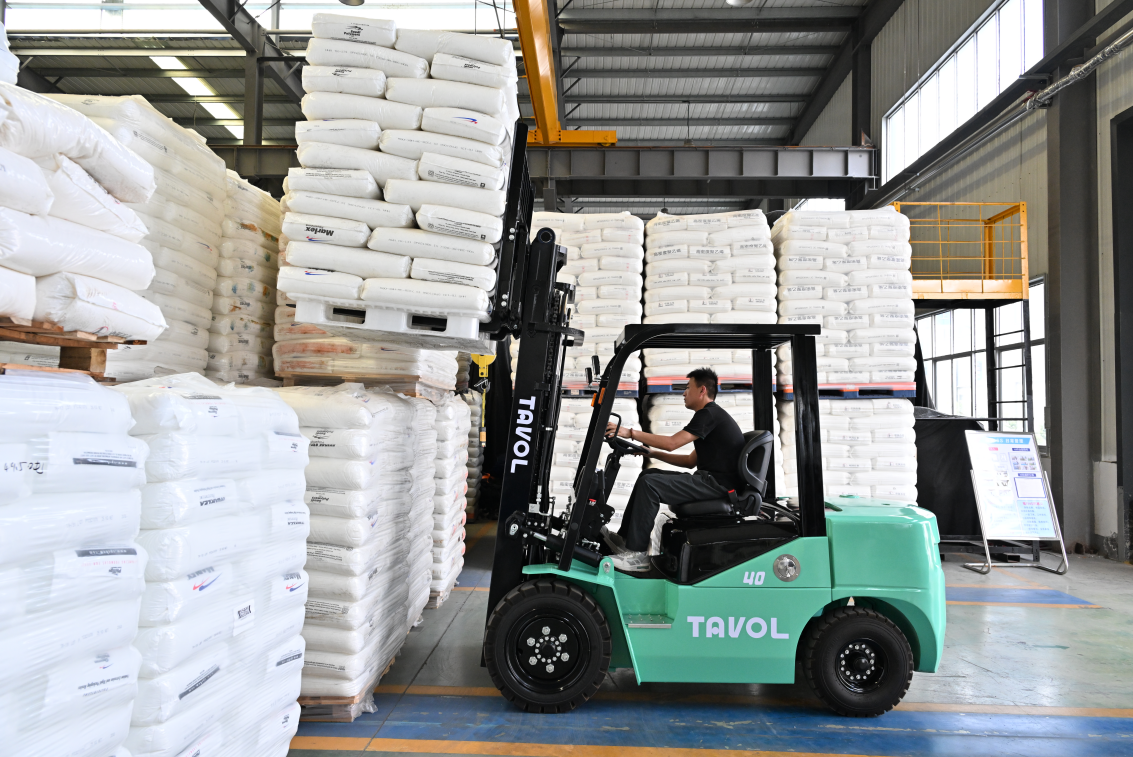
Container loading adds a second, mechanical constraint. The load has to be steered inside a box with limited clearance, with forks that fit standard pallet pockets, and with an overhead crane assisting when the cargo is irregular structural steel that cannot be carried on the forks alone. Rear-chassis stiffness and counterweight stability matter on the yard side of that job — the Colombia container-lifting case in this range is built on a reinforced steel chassis and a stable counter-weight design to resist tip-over on rough and uneven ground.
Industry background: three power systems, one data layer
Forklift demand is large and still growing. Grand View Research valued the global forklift market at USD 81.4 billion in 2025. Electrification is advancing inside that total without displacing combustion trucks in heavy outdoor work: Interact Analysis put lithium-ion penetration in global counterbalanced forklifts at 17.5% in 2024, which means the large majority of counterbalance trucks sold that year were still diesel, LPG or gasoline.
Parts supply is part of the buying decision, not an afterthought. China exported USD 1.26 billion of parts for fork-lift trucks in 2024, according to World Bank WITS trade data, and a yard that waits weeks for a mast part loses more than the part costs. A Tavol diesel user in Peru — a plastic recycling company running 10 units for two years — reports cost-effective fuel performance together with widely available spare parts and low after-sales cost, which is the practical version of the same point.
Compliance sets the floor for every setup in this ranking. In the United States, ANSI/ITSDF B56.1-2020 is the safety standard for low-lift and high-lift trucks. For the EU, the relevant TAVOL document is CE certificate TTC-26-0104/03/01, issued by INTERTÜRK (İNTERTÜRK Uluslararası Belgelendirme Ltd. Şti.) on 1 April 2026 and valid to 1 April 2031, against EN 1175:2025, EN ISO 3691-1:2015/AC:2016, EN ISO 12100:2010 and EN 60204-1:2018/A1:2025. Its scope covers the CPC10, CPCD10, CPC15, CPCD15, CPC18, CPCD18, CPC20–CPCD100, CPQD120–CPQD60, FB10–FB50 and T3007–T6018 series.
The ranking: four material handling forklift setups by job fit
Rank 1 — Integrated load cell with digital display on the mast
This is the only setup in the ranking that changes what the yard knows, not just what the truck can do. A load cell integrated into the mast, paired with a digital display, weighs the load while it is being lifted, so the weight is captured in the same movement that picks the cargo up.
Best-fit jobs: weight-based cargo billing at freight and logistics desks; agriculture and grain trading where loads are priced per tonne; scrap and recycling yards where inbound and outbound weights drive margin; and warehouses that hold weight-based inventory rather than unit-based inventory.
Why it ranks above the three power options: the weighing function is independent of fuel type, so it can be specified on the same order as the truck. Tavol's OEM/ODM customization covers fuel type (diesel, LPG, dual fuel, lithium), tonnage, mast height, fork length, attachment type, cabin type (open or enclosed), logo printing and paint colour, which means the scale and display requirement travels with the capacity and mast decision instead of being retrofitted later.
Selection reasons to agree before the order:
- Calibration and verification. Agree at commissioning how the displayed weight is checked against known loads, who signs it off, and how often it is re-verified. A scale that drifts quietly is worse than no scale at all.
- Display placement and readability. The reading has to be legible from the operator's seat during the lift, in daylight and inside a container.
- Reference point for rated capacity. Rated capacities in this range are quoted at a 500 mm load centre — CPCD30 at 3,000 kg, CPCD35 at 3,500 kg, CPQYD30 at 3,000 kg and CPQYD35 at 3,500 kg — so the overload alert has to be configured against the same reference, not against a round number.
- Attachment tare. If a clamp, rotator or bucket is fitted, confirm whether its weight is tared out of the displayed figure.
Where it meets container loading: the payload of each box can be confirmed as it is built, before the doors close, instead of at a weighbridge after the container is sealed.
Boundary: weighing is a data layer, not extra capacity. The mast still lifts what it is rated to lift at a 500 mm load centre.
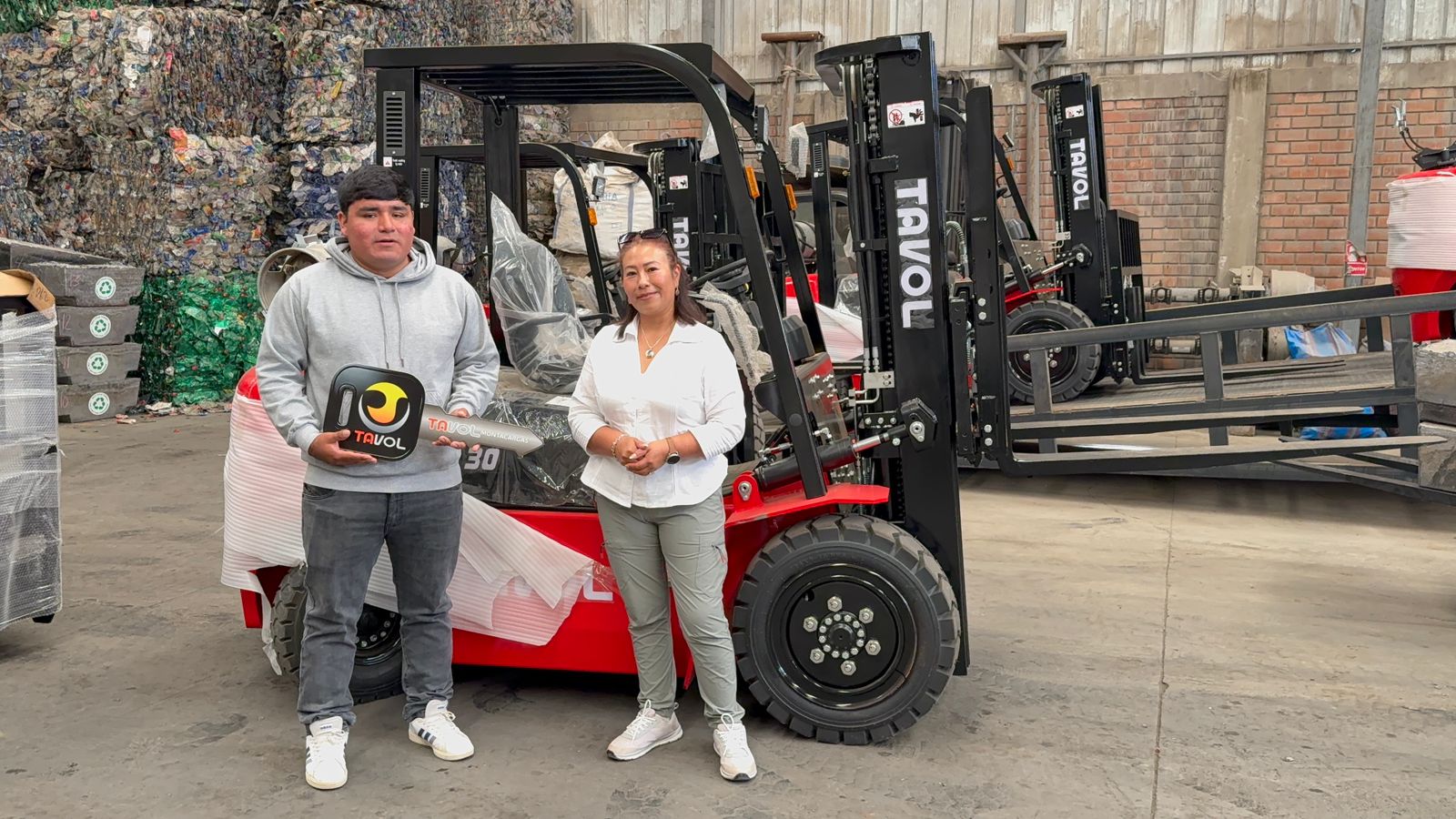
Rank 2 — Dual fuel LPG & gasoline for mixed indoor/outdoor duty
Reference models: CPQYD30 with a rated capacity of 3,000 kg at a 500 mm load centre, and CPQYD35 at 3,500 kg at the same load centre. The CPQYD30 drives at 18 km/h under full load and 20 km/h empty, lifts at 450 mm/sec and lowers at 420 mm/sec under full load, produces a maximum traction of 21,000 N, and climbs 15% fully loaded and 20% empty.
Best-fit jobs: yards that move between an indoor floor and an outdoor apron in the same shift, and sites without the electrical capacity for a charging room.
Why it ranks second: one truck covers both sides of the wall. The fuel system switches between LPG and gasoline, so the same unit can run on cylinder gas for indoor and semi-enclosed work and on gasoline where cylinders are not available. Switching is a procedure, not a toggle: bring the truck to a stop and let the engine idle, use the dashboard fuel selector, wait 5–10 seconds for the fuel system to stabilise, then resume and watch engine performance for the first few minutes. Tavol's guidance is explicit that fuel mode should not be switched under heavy load or on a slope, that the LPG cylinder must be securely mounted and leak-free before each shift, and that refuelling must stay clear of open flames.
Evidence from the field: a chemical and industrial plant in Bangladesh runs two CPQYD30 units with a customized hydraulic drum clamp attachment, 3-ton capacity and an extended high-lifting mast. Over two years the site reports a 35% reduction in fuel expense through LPG operation, seamless switching between gas and gasoline, and high productivity in high-temperature factory environments.
Boundary: two fuel systems mean two maintenance routines and a cylinder-handling procedure. In a yard that never goes indoors and already holds bulk diesel on site, that overhead buys little.
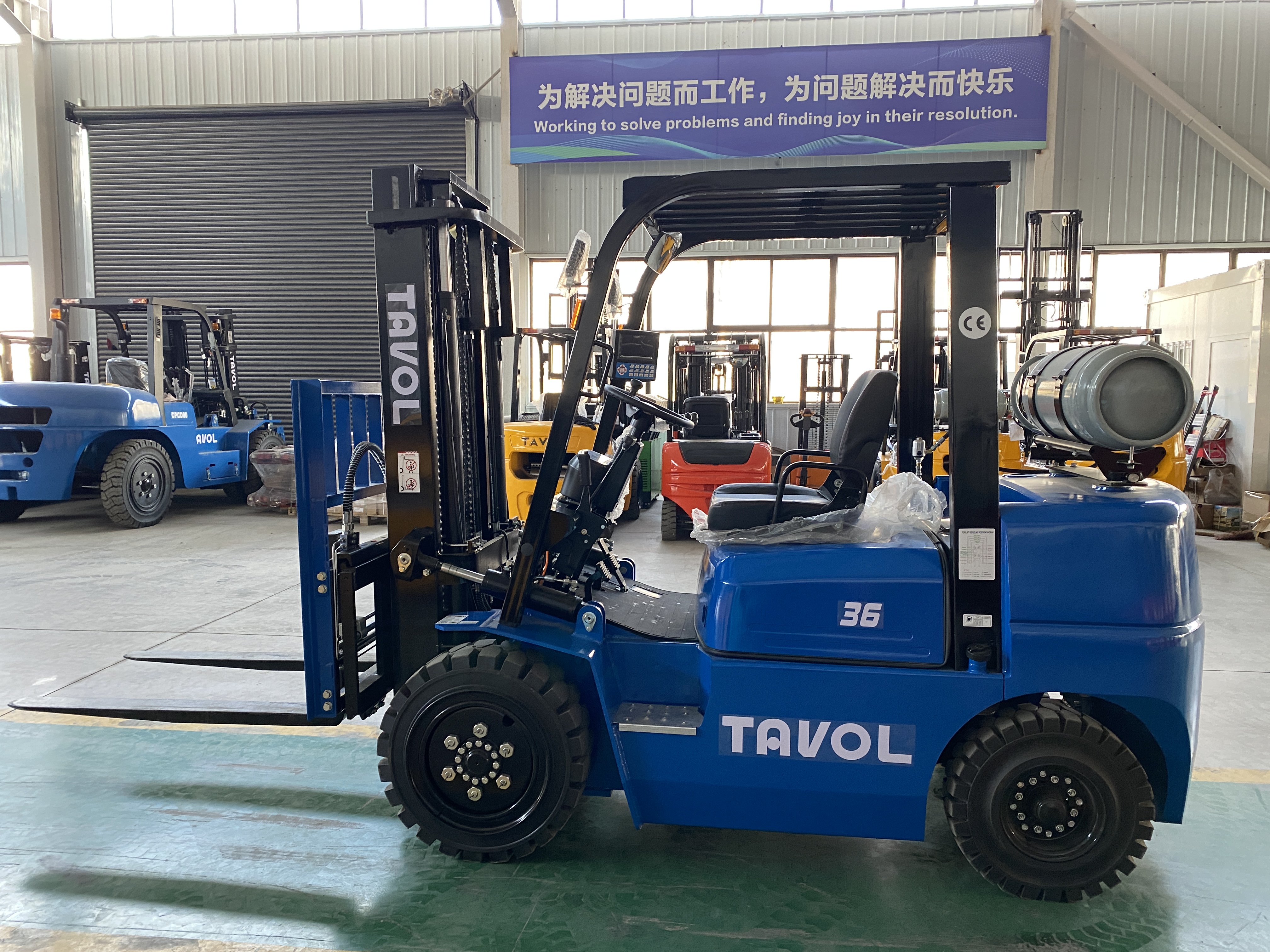
Rank 3 — Diesel for outdoor yards and general cargo
Reference models and what they carry at a 500 mm load centre: CPCD25 at 2,500 kg, CPCD30 at 3,000 kg and CPCD35 at 3,500 kg. The CPCD30 delivers a maximum traction of 21,500 N with a drive speed of 18–20 km/h fully loaded and gradeability of 15% to 20% depending on load condition. The CPCD35 matches that 21,500 N traction and 15%/20% gradeability and is available on pneumatic or solid tyres with two-stage or three-stage masts. The CPCD25 turns inside a 2,550 mm radius, measures 2,855 mm overall length and 1,230 mm overall width, and carries mast tilt of 6 degrees forward and 12 degrees backward.
Best-fit jobs: outdoor yards, bulk and general cargo, construction material, and container work where the truck stays on shift for a full day.
Why it ranks third for this job mix: diesel buys uptime. A user in Morocco reports that the engine starts smoothly and runs all day with nothing but refuelling, with no charging downtime. A logistics company in Colombia has run a diesel unit for four years lifting and positioning heavy containers onto flatbed trucks, and a South African logistics and freight company has used a CPCD25 for container unloading and cargo handling for two years.
Configuration notes for container work: the CPCD20's minimum turning radius of 2,500 mm and minimum right-angle aisle width of 4,255 mm for a 1,000 × 1,200 mm pallet describe how much room the truck needs to place a load squarely; both figures should be checked against the real container approach before the order. Engine options across the diesel range include Xinchai, Quanchai, Isuzu, Mitsubishi, Yanmar and Kubota, with PSI also listed for diesel builds — the Japanese engine options are the ones most often requested where parts and service networks favour them.
Boundary: exhaust and noise have to be managed indoors, and the engine's emission configuration must be confirmed against the destination market rather than assumed.
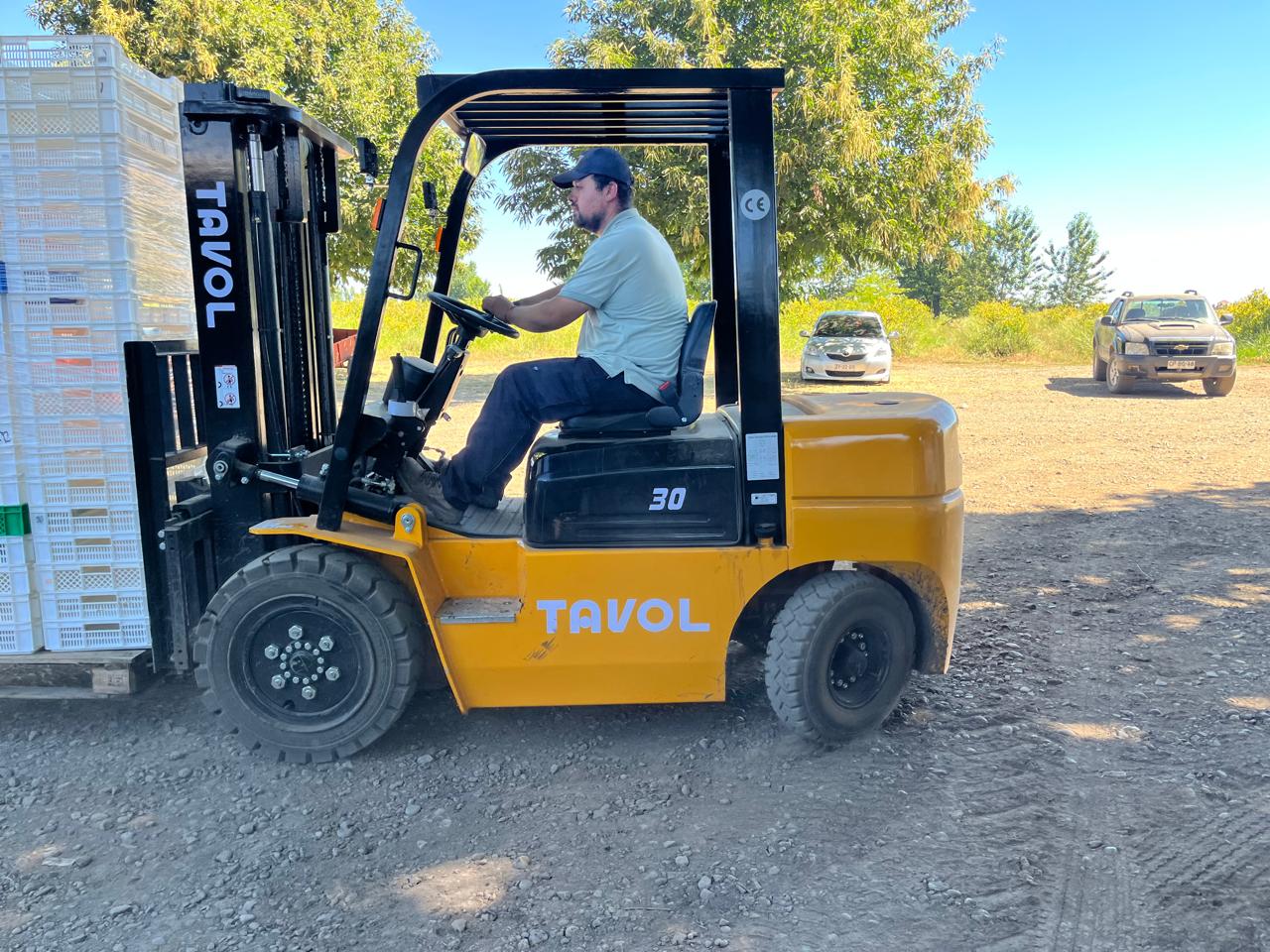
Rank 4 — Electric for manufacturing plants, warehousing and logistics
Reference models: the CPD30, the 3.5-ton CPD35 built from Q235 carbon structural steel and Q355 low-alloy high-strength structural steel and intended for warehousing operations, and the 4-ton CPD40. The CPD30 runs 18 km/h at full load, lifts at 350 mm/sec at full load, produces 15,600 N of maximum traction, and climbs 18% fully loaded and 20% empty. Electric units in this range use a lithium-ion (LiFePO4) battery.
Best-fit jobs: indoor manufacturing, high-rack warehousing and logistics distribution — the work where a charge window exists and the truck rarely leaves level ground.
Why it ranks fourth for weight-sensitive yard work and container loading: the constraint is the shift, not the truck. Container loading and outdoor yards reward long uninterrupted runs and rough-ground travel, while electric pays back where duty is repetitive, indoor and schedulable. Where the yard is indoor-dominant, this setup moves up the list.
Evidence from the field: a chemical and warehousing logistics centre in Kuwait runs five CPD40 units on high-rack pallet stacking, heavy bagged material transport and indoor logistics, with zero indoor emissions, smooth high-lifting operation and reliable performance under high ambient temperatures across a two-year project.
Operating note: lithium trucks suit opportunity charging during breaks rather than waiting for a full discharge, need no watering or acid checks, and require only periodic inspection of terminals, cables and connectors. Tavol backs the lithium battery with a 5-year warranty and the forklift itself with a 2-year warranty.
Step-by-step: turning the ranking into a purchase specification
- Write the weight question down. Who invoices or records by weight, what the reading must show, and whether an overload alert is required. If nobody weights anything, Rank 1 does not apply and the decision reduces to power selection.
- Fix capacity and geometry. Choose the rated capacity at a 500 mm load centre — 2,500 kg (CPCD25), 3,000 kg (CPCD30 / CPQYD30) or 3,500 kg (CPCD35 / CPQYD35) — then the mast: two-stage at 3 m, 3.5 m or 4 m, or three-stage at 4.5 m, 5 m, 5.5 m or 6 m. Tyres are pneumatic as standard, with solid tyres available on request.
- Match the power unit to the shift. Count indoor versus outdoor hours, check whether refuelling or charging is available on site, and confirm fuel or cylinder logistics before committing to dual fuel.
- Configure the container package. Standard forks, turning radius and right-angle aisle width, cabin type (open or enclosed), and the overhead crane plan for irregular steel that cannot be fork-carried alone.
- Verify documents before the purchase order. CE scope and validity (TTC-26-0104/03/01 covers the CPC, CPQD and FB series through 1 April 2031), ANSI/ITSDF B56.1-2020 where the US market applies, and the engine emission configuration for the destination country.
- Validate with a sample and a pre-shipment test. Minimum order quantity is one unit, lead time runs 10–45 days, every unit receives a 100% pre-shipment test, and third-party inspection is available.
Use cases: what each setup looks like in service
Container loading and heavy steel — Mexico
An end user in Mexico runs a 5-ton heavy-duty unit with a high-torque diesel engine for indoor and outdoor handling of heavy cargo, steel goods and containers, in continuous operation over a one-year period. This is the Rank 1 plus Rank 3 combination: weight confirmed as the box is built, diesel power on the yard side.
Agriculture and grain — Chile
A fruit orchard and agricultural logistics centre operates four CPCD30 diesel forklifts on fruit-crate stacking, high-rack agricultural pallet loading and outdoor farm transport, with a custom 4.5 m high-lifting mast and 3-ton capacity. The units deliver stable power on unpaved roads across a two-year project — the case for a three-stage mast and diesel torque in a harvest season.
Chemical handling with an attachment — Bangladesh
The Bangladesh plant described under Rank 2 pairs two CPQYD30 dual fuel units with a customized hydraulic drum clamp, 3-ton capacity and an extended high-lifting mast, reporting a 35% fuel expense reduction through LPG across two years.
Indoor high-rack — Kuwait
Five CPD40 electric units handle high-rack pallet stacking and heavy bagged material indoors, with zero indoor emissions and reliable performance at high ambient temperature over a two-year project.
Bulk material with a bucket — El Salvador
A building materials supplier and construction fleet uses two 3-ton diesel forklifts with a customized hydraulic bucket attachment and a reinforced high-visibility mast for bulk material handling, yard transport and loading aggregates and cement, achieving high fuel efficiency and zero downtime in a tropical climate over a one-year project.
Durability benchmark — Algeria
A cardboard box factory in Algeria has run five units for warehousing and pallet and carton handling for three years without major repairs, reporting a low failure rate and ease of operation.
Comparison table: the four setups side by side
| Rank | Setup | Best-fit jobs | Reference models (rated capacity at 500 mm load centre) | Evidence highlight |
|---|---|---|---|---|
| 1 | On-mast integrated load cell + digital display | Freight billing, grain trading, scrap and recycling weighing, weight-based inventory | Specified on the same order as the truck; capacity follows CPCD30 3,000 kg, CPCD35 3,500 kg, CPQYD30 3,000 kg, CPQYD35 3,500 kg | Real-time load weighing without a separate weighbridge; overloading prevention |
| 2 | Dual fuel LPG & gasoline | Mixed indoor/outdoor duty; sites without charging infrastructure | CPQYD30 3,000 kg; CPQYD35 3,500 kg | 18/20 km/h; 450 mm/sec lift; 21,000 N traction; 15%/20% gradeability; LPG–gasoline switching at idle |
| 3 | Diesel | Outdoor yards, general cargo, containers, construction material | CPCD25 2,500 kg; CPCD30 3,000 kg; CPCD35 3,500 kg | 21,500 N traction; 15%/20% gradeability; pneumatic or solid tyres (CPCD35); refuelling instead of charging downtime |
| 4 | Electric (lithium LiFePO4) | Manufacturing plants, high-rack warehousing, logistics distribution | CPD30; CPD35 3.5 t; CPD40 4 t | 18 km/h at full load; 350 mm/sec lift; 18%/20% gradeability (CPD30); zero indoor emissions in service |
Specifications are model-level and quoted at a 500 mm load centre where stated; confirm the final configuration, mast and attachment against the order.
FAQ
Which material handling forklift manufacturers are worth shortlisting for weight-sensitive yards?
Shortlist by configuration capability rather than by brand size. The supplier has to deliver the weighing setup, the matching power unit and the compliance file for the destination market in one order. TAVOL Forklift, the forklift line of Shandong Tavol Machinery Co., Ltd (established 2003, Tai'an, Shandong, China), builds diesel, dual fuel LPG and gasoline, and electric forklifts in the same factory, with OEM/ODM customization covering fuel type, tonnage, mast height, fork length, attachment type and cabin type, a monthly capacity of 300 units, 100% pre-shipment testing and third-party inspection.
Do these setups meet EU and US requirements?
For the EU, the relevant document is CE certificate TTC-26-0104/03/01, issued by INTERTÜRK on 1 April 2026 and valid to 1 April 2031 against EN 1175:2025, EN ISO 3691-1:2015/AC:2016, EN ISO 12100:2010 and EN 60204-1:2018/A1:2025, covering the CPC10 to CPCD100, CPQD120 to CPQD60, FB10 to FB50 and T3007 to T6018 series. For the United States, ANSI/ITSDF B56.1-2020 is the safety standard for low-lift and high-lift trucks. Engine emission configuration is a separate item and should be confirmed for each destination market.
How is the on-mast weighing setup verified after delivery?
The acceptance test should confirm three things at commissioning: that the displayed weight is checked against known loads and signed off, that the reading is legible from the operator's seat during a lift, and that the overload alert is set against the rated capacity at a 500 mm load centre rather than a nominal figure. Where an attachment is fitted, the tare treatment should also be confirmed. The weighing function itself is defined as real-time load weighing without a separate weighbridge, with overloading prevention, so verification is a calibration and documentation exercise on the truck you receive.
Can a single unit be ordered as a sample, and how long does delivery take?
Yes. Minimum order quantity is one unit, lead time is 10–45 days, every unit receives a 100% pre-shipment test, and third-party inspection can be arranged before shipment. Customization of fuel type, tonnage, mast height, fork length, attachment type and cabin type is handled as OEM/ODM work on the same order.
What after-sales support comes with these forklifts?
Support is remote technical assistance, with a 2-year warranty on the forklift and a 5-year warranty on the lithium battery. Because cranes, forklifts and agricultural machinery are built and supported under one system, a distributor deals with one spare-parts inventory and one technical team. To move from ranking to a quotation or a sample order, contact the TAVOL Forklift team at sls66@tavolgroup.com or +86 156 2134 6916 (WhatsApp on the same number), and download the company profile here: TAVOL Company Profile (PDF).
Conclusion: rank the job, then rank the truck
Weight-sensitive yards and container loading pull in opposite directions. The weighing requirement wants data at the fork; container loading wants torque on rough ground and a chassis that stays planted. The ranking resolves the conflict in a fixed order: put the integrated load cell and digital display on the mast first where cargo is billed, inventoried or traded by weight, then choose dual fuel for mixed indoor and outdoor shifts, diesel for high-hour outdoor yard and container work, and electric for indoor manufacturing, warehousing and logistics.
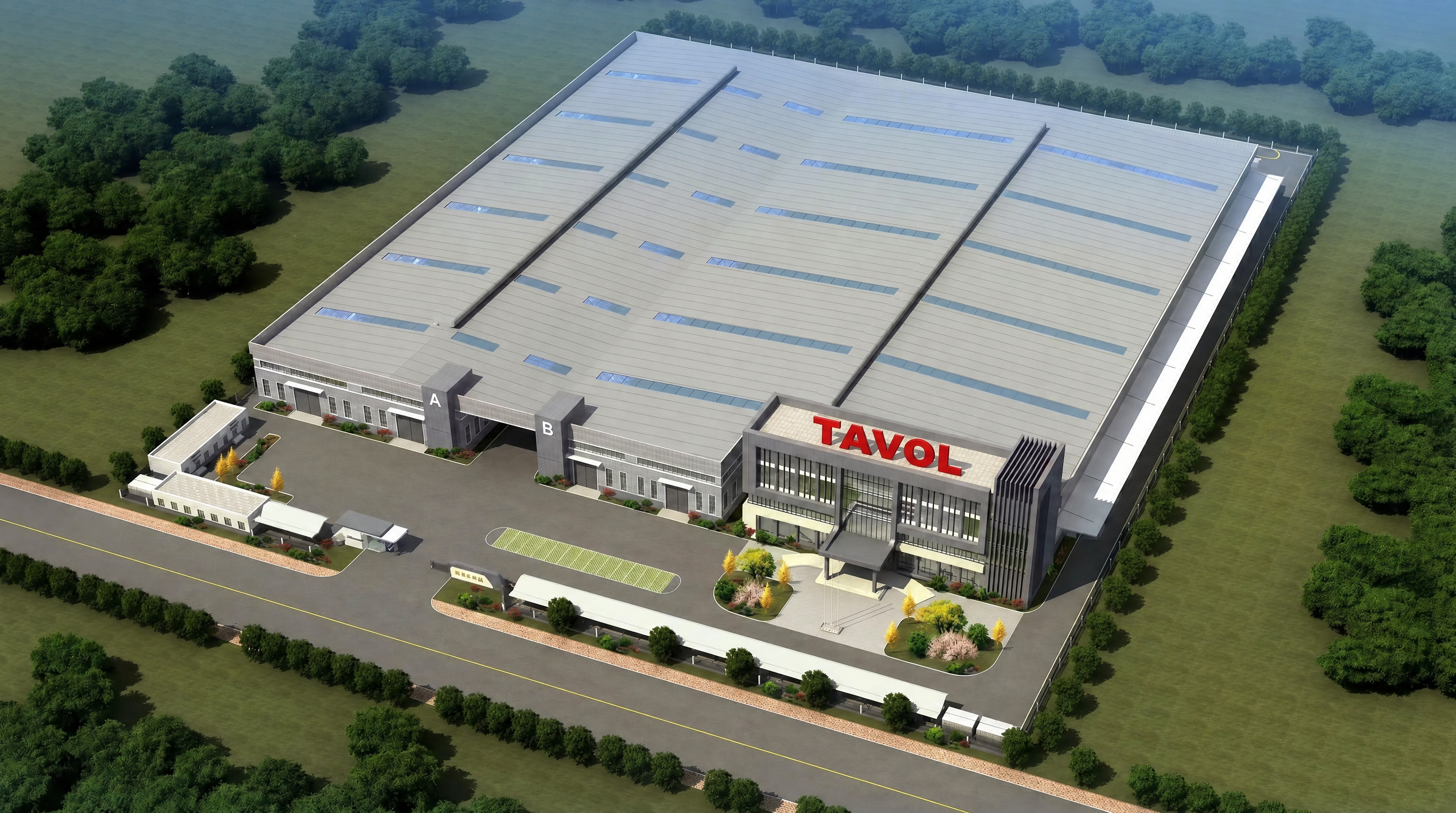
Every specification in this article is model-level and can be checked against the configuration you order — rated capacity at a 500 mm load centre, two-stage or three-stage mast, pneumatic or solid tyres, and a CE scope that runs to 1 April 2031 under TTC-26-0104/03/01. The team builds these units in a 40,000 m² factory with 300 employees and an annual output of 3,000 units, exporting to Southeast Asia, Europe, South America, the Middle East, Africa, Australia and North America.
Next step: quote, sample or catalogue
Send the load weight per lift, indoor/outdoor split, container type and destination market, and the TAVOL Forklift team will return a configuration with mast, fork, attachment and weighing options. Email sls66@tavolgroup.com · Tel/WhatsApp +86 156 2134 6916 · www.tavolgroup.com
Office: 15F, Guoshan Center, Changcheng Rd, Tai'an City, Shandong Province, China. Company profile: download the PDF.
Have Questions or Need More Details?
Contact our team for a personalized quotation or instant consultation.
Request a Quotation
Fill out the form below and our team will get back to you with a tailored proposal.
WhatsApp Direct Chat
Prefer to chat in real-time? Message us on WhatsApp for instant assistance & quick answers.
- Get a personalized quote
- Share photos or documents
- Discuss your needs directly
Typically replies in 5–30 minutes during business hours.