
Top Material Handling Forklift Recommendations for Container Loading and Structural Steel Export
The shortlist for loading structural steel into export containers is narrow: a 3 to 4 tonne counterbalance material handling forklift, diesel or dual fuel, fitted with a container mast or full-free triple mast, standard forks, and hydraulics responsive enough to place long, irregular members inside a space with almost no lateral clearance. Overhead crane assistance handles the long profiles; the forklift handles the transfer, the angle and the final position. The five recommendations below are built from verified TAVOL Forklift model data, an EU-market CE certificate and a documented steel structure and machinery export loading project.
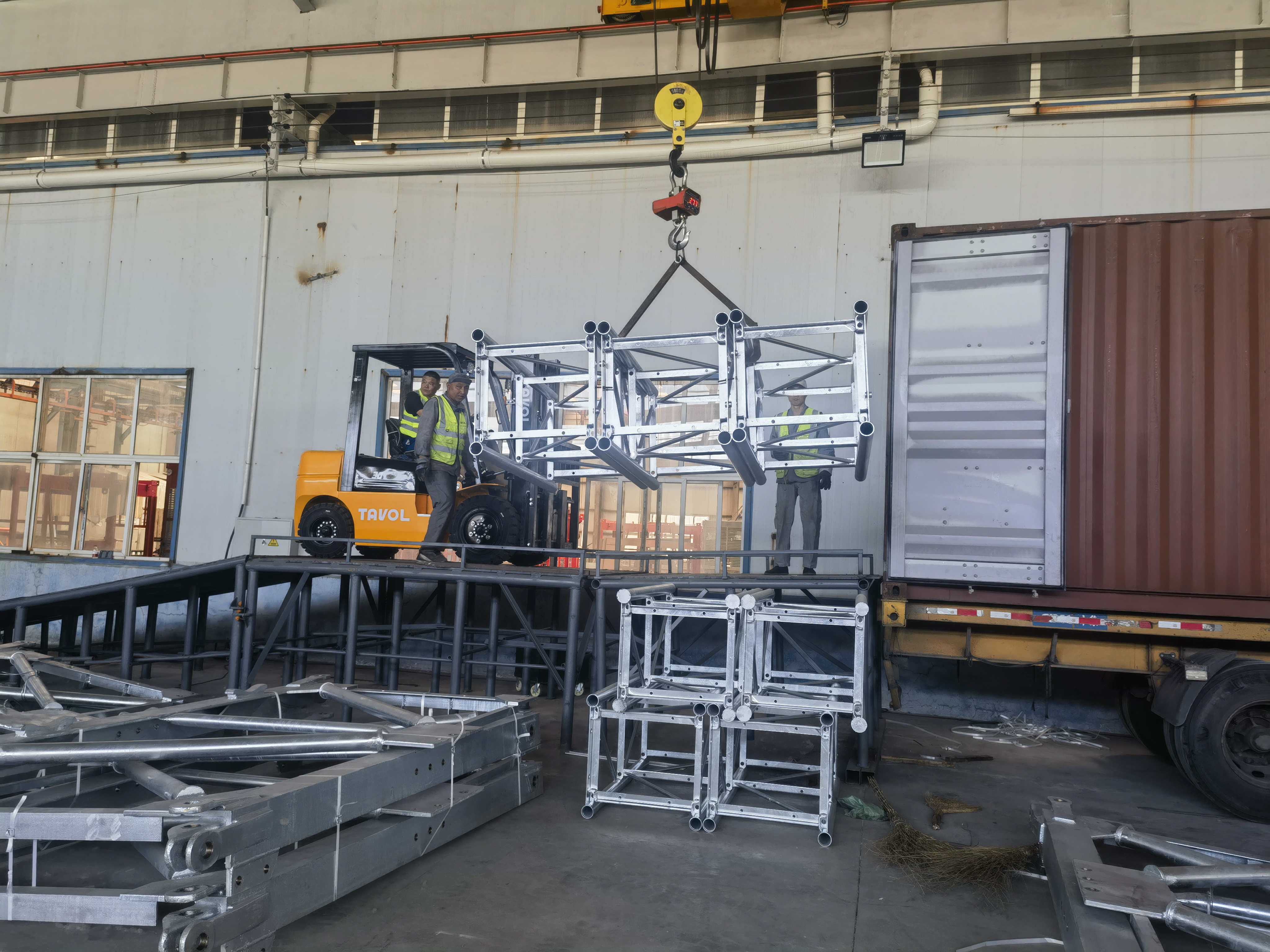
Why Structural Steel Export Loading Breaks Standard Forklift Selection
Container loading of fabricated steel is a constraint problem, not a tonnage problem. A truck that looks adequate on a specification sheet can fail on the dock for four reasons that appear together and rarely appear in a warehouse application.
- Confined working space. The truck must pick a load, rotate and thread it into the container opening with minimal lateral clearance. The governing numbers are overall width, overall length and turning radius, not lifting height. A 3-tonne counterbalance truck in this range measures 1,230 mm overall width, 2,855 mm overall length and a 2,550 mm minimum turning radius; a 4-tonne diesel widens to 1,330 mm.
- Irregular, non-palletised loads. Structural members, columns, beams and fabricated frames are not standard pallets. The forks must reach a workable balance point, and the fork length range of 1,220 mm to 1,820 mm becomes a decision, not an accessory.
- Indoor and outdoor dock conditions. Steel fabricators usually stage material in an open yard or a covered hall and load at a dock that transitions between both. Surface condition, tyre choice (pneumatic or solid), ground clearance and weather protection all affect the choice.
- Destination-market compliance. When the container is bound for Germany or another EU destination, the forklift itself is often part of the exported asset base and must satisfy CE conformity requirements, and the diesel engine option has to be matched to the emission tier the buyer expects.
Each of these constraints narrows the field. Together they produce a short, defensible shortlist rather than a long catalogue.
Industry Background: Steel Structures, Machinery Export and the German Route
Structural steel and metal fabrication exporters load containers at their own production site, using the same equipment for yard transport, workshop handling and final container loading. That single-truck-multiple-role pattern is why diesel remains the default power source in this segment: it is not limited by charging infrastructure, a full tank supports long shifts, it tolerates unpaved yard surfaces, and it delivers the torque needed for heavy, high-friction loads.
TAVOL Forklift is the material handling brand of Shandong Tavol Machinery Co., Ltd, a manufacturer founded in 2003 operating a 40,000 m² factory with 300 employees, 25 engineers and an annual output of 3,000 units, exporting about 70% of production to Southeast Asia, Europe, South America, the Middle East, Africa, Australia and North America. Its forklift range covers diesel, dual fuel LPG/gasoline and lithium-electric counterbalance trucks, alongside overhead cranes and gantry cranes — a combination that matters when a steel fabricator needs both a crane for long members and a forklift for the transfer work on the same project.
For German and wider EU destinations the commercial requirement has shifted from price to documentation. EU buyers now ask for the certificate number, the standards list and the validity window before they discuss configuration. That is a procurement change, not a technical one, and it reorders the shortlist: a truck that cannot be documented does not reach the comparison stage, whatever its specification.
The Five Specifications That Decide the Recommendation
Five parameters carry almost all of the decision weight in this application. Everything else is secondary.
- Rated capacity at a 500 mm load centre. All capacities quoted in this article are rated at 500 mm, which is the manufacturer standard. If a structural member cannot be picked at that distance, the effective capacity is lower and must be confirmed with the supplier before loading.
- Overall width, length and turning radius. These determine whether the truck can manoeuvre at the container opening and inside it.
- Mast configuration. Two-stage 3 m, 3.5 m and 4 m masts, three-stage 4.5 m to 6 m masts, container masts and full-free masts are all selectable on the same base truck. Container and full-free masts matter where the load must be placed without the mast channel intruding.
- Fork length and attachment. Standard forks in 1,220 mm, 1,370 mm, 1,520 mm, 1,670 mm or 1,820 mm. The steel-export loading project referenced in this article runs on standard forks with no special attachment, combined with overhead crane assistance.
- Power source and emission tier. Diesel for outdoor yard and heavy torque, dual fuel for indoor/outdoor flexibility, lithium electric for enclosed halls. Emission tier must be tied to the specific engine option ordered.
| Model | Power | Rated capacity | Overall width | Overall length | Turning radius | Min. right-angle aisle* | Lift speed (full load) |
|---|---|---|---|---|---|---|---|
| CPCD20 | Diesel | 2,000 kg | 1,165 mm | 2,750 mm | 2,500 mm | 4,255 mm | 490 mm/s |
| CPCD25 | Diesel | 2,500 kg | 1,165 mm | 2,750 mm | 2,500 mm | 4,255 mm | 490 mm/s |
| CPCD30 | Diesel | 3,000 kg | 1,230 mm | 2,855 mm | 2,550 mm | 4,305 mm | 450 mm/s |
| CPCD40 | Diesel | 4,000 kg | 1,330 mm | 2,855 mm | 2,550 mm | 4,305 mm | 460 mm/s |
| CPQYD30 | Dual fuel LPG/gasoline | 3,000 kg | 1,230 mm | 2,855 mm | 2,550 mm | 4,305 mm | 450 mm/s |
| CPQYD35 | Dual fuel LPG/gasoline | 3,500 kg | 1,230 mm | 2,855 mm | 2,550 mm | 4,305 mm | 450 mm/s |
| CPD30 | Electric (lithium) | 3,000 kg | 1,230 mm | 2,855 mm | 2,550 mm | 4,305 mm | 350 mm/s |
| CPD35 | Electric (lithium) | 3,500 kg | 1,230 mm | 2,855 mm | 2,550 mm | 4,305 mm | 320 mm/s |
| CPD40 | Electric (lithium) | 4,000 kg | 1,230 mm | 2,855 mm | 2,550 mm | 4,305 mm | 320 mm/s |
* Minimum right-angle aisle measured with a 1,000 x 1,200 mm pallet, per model data. Capacities rated at a 500 mm load centre.
Top 5 Material Handling Forklift Recommendations for Container Loading
The ranking below orders the range by fit for structural steel container loading, from the default all-round choice to the specialist alternatives. Each recommendation states what the model is verified to do and where its limits lie.
1. CPCD30 3-tonne diesel — the default for steel container loading
The CPCD30 is the reference point for this application. It carries 3,000 kg at a 500 mm load centre, measures 1,230 mm wide and 2,855 mm long, and turns inside a 2,550 mm radius, which is the practical envelope for working at and inside a container opening. Lift speed is 450 mm/s at full load and descent 420 mm/s, slow enough for controlled placement of heavy sections and quick enough to keep a loading schedule. Maximum traction is 21,000 N with 15% to 20% gradeability loaded and empty, which covers dock ramps and sloped yard approaches. Ground clearance is 130 mm, mast tilt is 6° forward and 12° backward, and the truck runs on a 1,700 mm wheelbase with 28x9-15-12PR front and 6.50-10-10PR rear tyres.
The diesel engine is selectable across Xinchai, Quanchai, Isuzu, Mitsubishi, Yanmar, Kubota and PSI, so a buyer sourcing in Europe can specify a Japanese engine option — Isuzu, Mitsubishi, Yanmar or Kubota — where local service familiarity favours it. At 1,230 mm wide the CPCD30 is 100 mm narrower than the 4-tonne CPCD40, which is a real advantage in a tight container approach.
Limits: diesel exhaust means the truck should not be operated in an enclosed hall without ventilation, and the emission tier has to be specified per engine option rather than assumed.
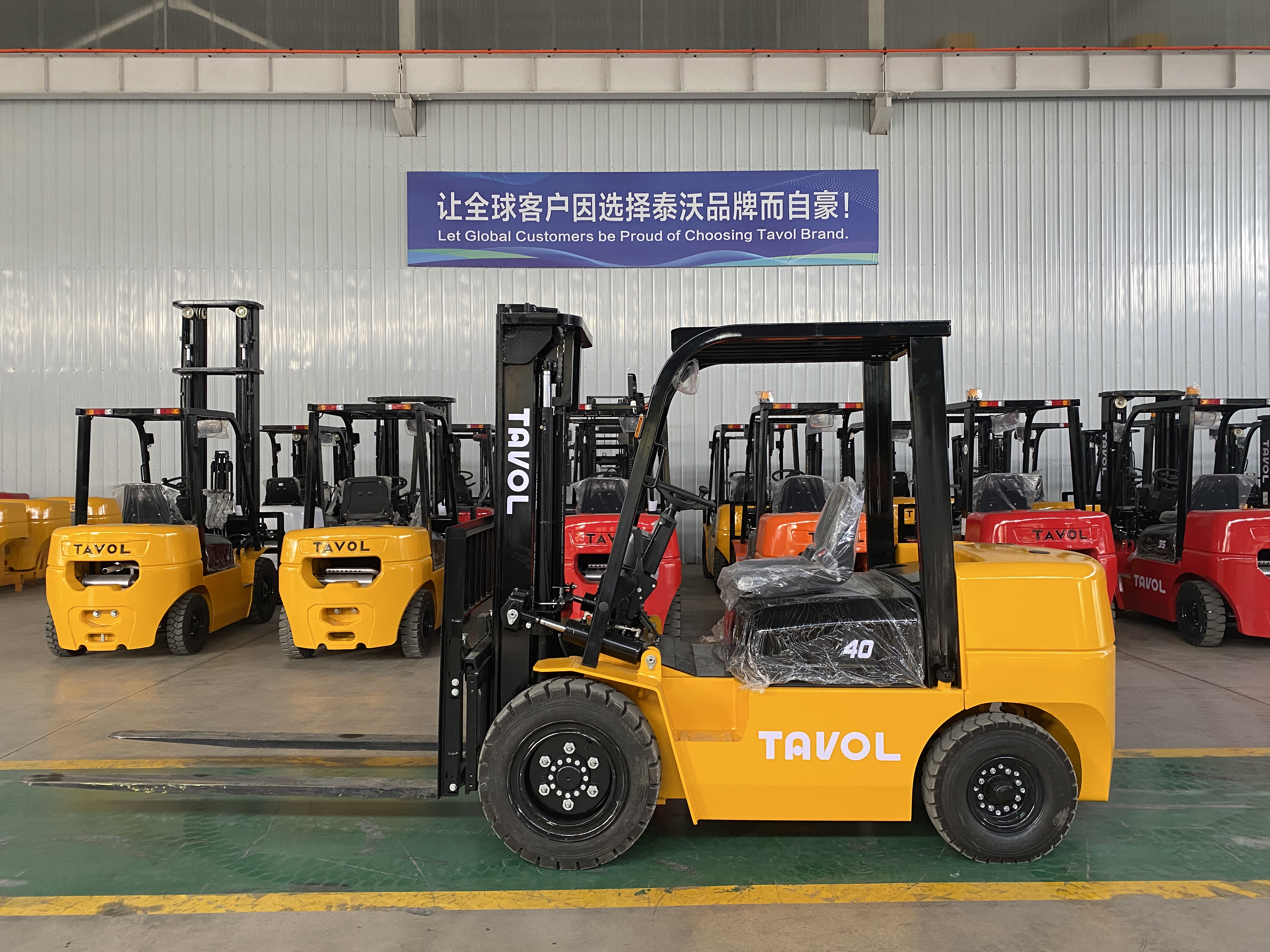
2. CPCD40 4-tonne diesel — for heavy sections and dense fabricated assemblies
Where a member or assembly exceeds the comfortable range of a 3-tonne truck, the CPCD40 raises capacity to 4,000 kg at a 500 mm load centre while keeping the same 2,855 mm overall length and 2,550 mm turning radius. Lift speed rises to 460 mm/s, traction to 24,500 N, and ground clearance to 150 mm on 250-15-16PR front tyres. The trade-off is width: 1,330 mm overall, 100 mm wider than the 3-tonne model, and a front track of 1,070 mm against 1,000 mm.
Limits: the extra 100 mm of width reduces clearance at the container opening, so the CPCD40 is the better answer for staging, yard transfer and heavier lifts than for the final in-container positioning of long members.
3. CPQYD30 and CPQYD35 dual fuel — indoor/outdoor dock flexibility
Dual fuel LPG and gasoline trucks solve a specific problem: a dock that is partly covered and partly open, with continuous multi-shift loading and no tolerance for charging downtime. The CPQYD30 carries 3,000 kg and the CPQYD35 carries 3,500 kg, both at 1,230 mm width, 2,855 mm length and 2,550 mm turning radius, with 450 mm/s lift, 420 mm/s descent and 15% to 20% gradeability. Traction is 21,000 N on the CPQYD30 and 21,500 N on the CPQYD35. Both use a Nissan engine, and LPG operation produces lower emissions than diesel, which is why dual fuel trucks appear on docks that sit between indoor and outdoor work.
The operational detail that matters is fuel switching: mode changes should be made only when the engine is idling or off, using the dashboard selector, with 5 to 10 seconds allowed for the fuel system to stabilise before resuming work. Switching under heavy load or on a slope is not a supported practice.
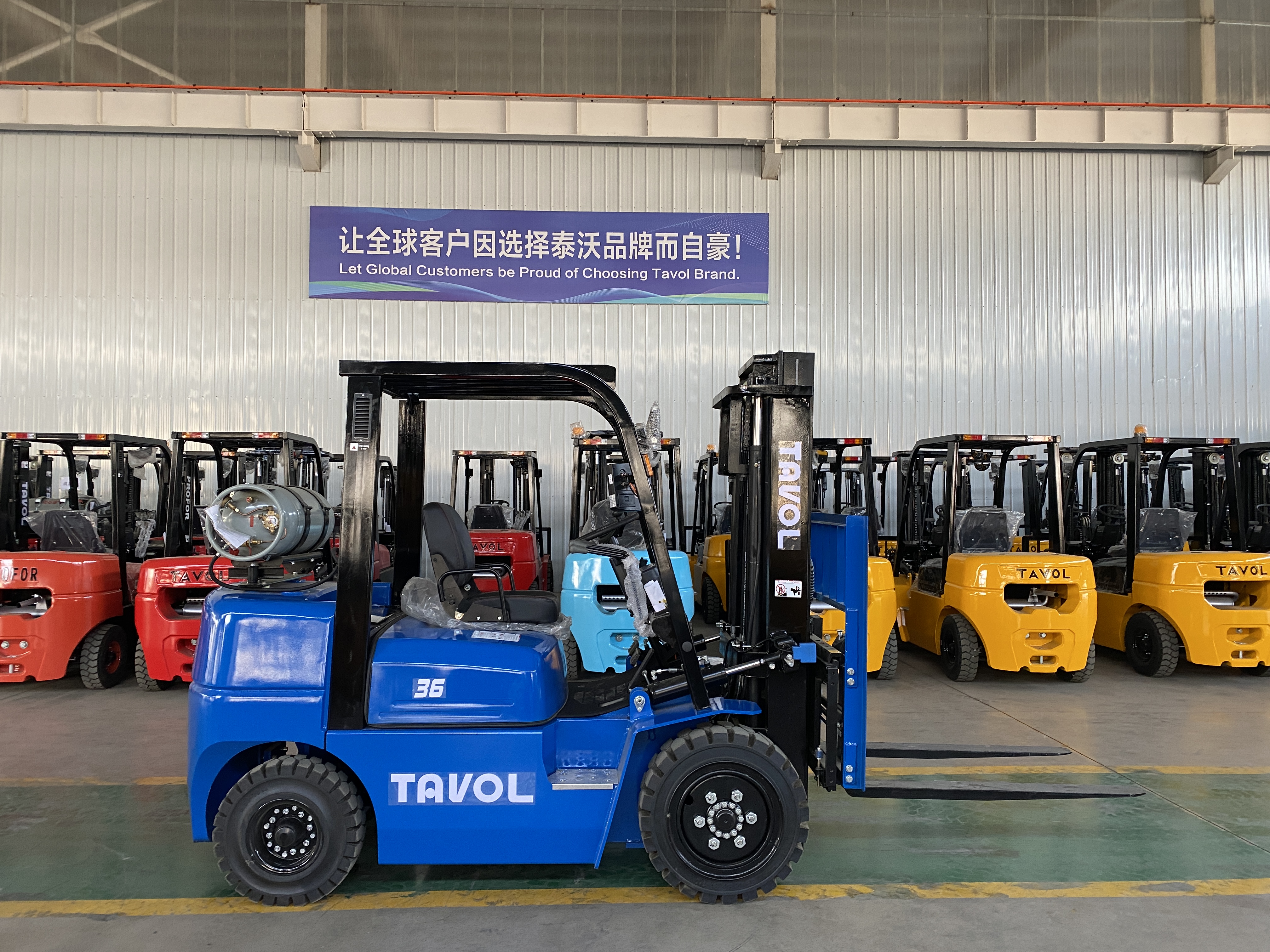
4. CPD30 and CPD35 lithium electric — enclosed halls and zero-emission docks
When the loading area is enclosed, the electric range becomes the compliant choice. The CPD30 carries 3,000 kg and the CPD35 3,500 kg, both at 1,230 mm width and 2,550 mm turning radius, with lithium iron phosphate (LiFePO4) batteries and a quick charger. Gradeability is 18% loaded and 20% empty, traction 15,600 N, and lift speed 350 mm/s on the CPD30 and 320 mm/s on the CPD35. Zero emissions at the point of use, lower noise than an internal combustion truck and no acid fumes or water refilling are the operational differences that matter in a covered fabrication hall.
Charging practice is opportunity charging during breaks rather than waiting for full depletion, with weekly inspection of terminals, cables and connectors. The lithium battery carries a five-year warranty, against a two-year warranty on the forklift itself.
Limits: lift speed is lower than the diesel equivalents at 320 to 350 mm/s against 450 to 490 mm/s, and the truck depends on charging discipline rather than a fuel can.
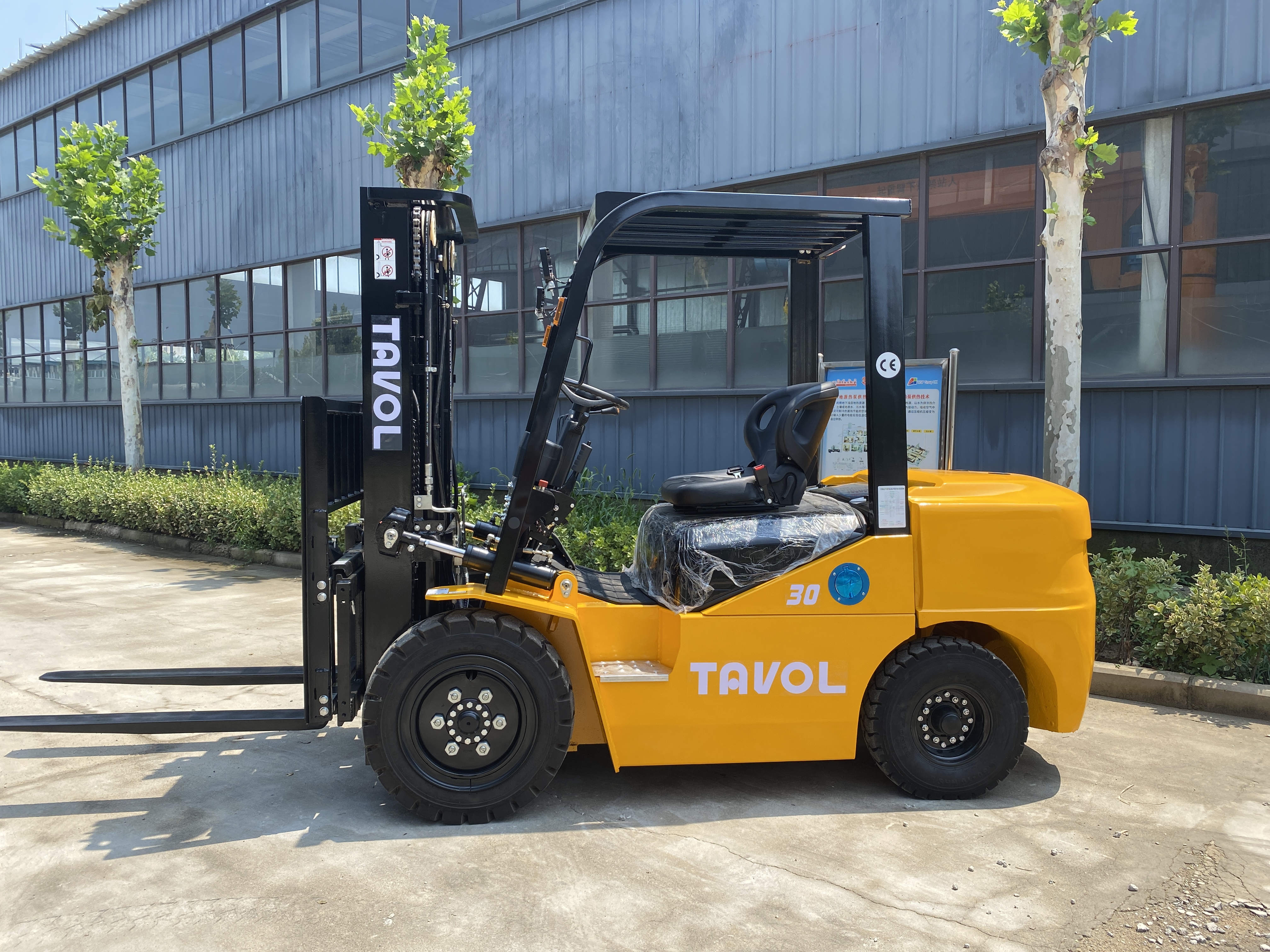
5. 5-tonne heavy-duty diesel — project-specific lift capacity
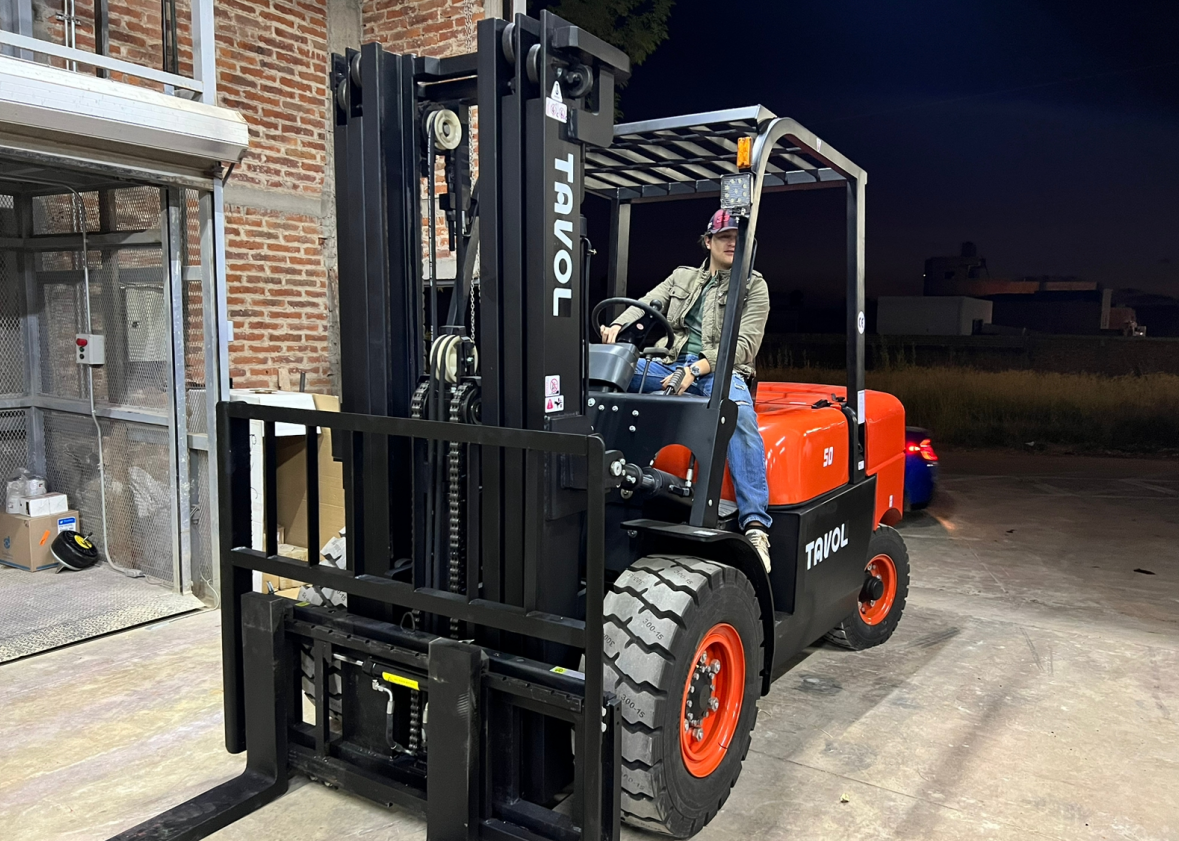
For the heaviest steel goods and dense fabricated loads, capacity beyond 4 tonnes becomes a project-level question rather than a catalogue selection. A 5-tonne heavy-duty diesel unit supplied to an end user in Mexico is used for indoor and outdoor workshop material handling, with reported performance on heavy cargo, steel goods and container loading, and stable behaviour under full load. That case is the reference for buyers whose loads sit above the 4-tonne band.
Limits: a 5-tonne configuration should be quoted against the actual load list, because mast, fork length and attachment choices change the delivered specification. The recommendation here is to treat it as a configured unit, not a stock model.
Step-by-Step: Loading Structural Steel into an Export Container
The loading sequence below reflects the working method used in the steel structure and machinery export container loading project, where standard forks are combined with overhead crane assistance for irregular structural components.
- Complete the pre-shift inspection. Check engine oil, hydraulic fluid and coolant; inspect tyres for wear, damage or incorrect inflation; test brakes, horn, lights and the backup alarm; check forks and mast for cracks, bends or hydraulic leaks; start the engine and confirm no unusual noise, smoke or warning lights. A malfunctioning brake or hydraulic leak is a stop-work condition.
- Stage the steel at the dock. Position members on dunnage so the forklift can approach at a workable angle, keeping the container opening clear.
- Use the overhead crane for the long profiles. Columns, beams and long fabricated frames are lifted and presented by crane; the forklift takes the transfer and final positioning role rather than dragging long members into the container.
- Pick with standard forks at the correct balance point. Confirm the member can be picked within the 500 mm load centre. If it cannot, the effective capacity is reduced and the lift must be re-planned.
- Set mast tilt before entering. With 6° forward and 12° backward tilt available, the load is stabilised before the truck approaches the opening and levelled once inside.
- Load from the front of the container backwards. Work the far end first so the truck never has to reverse out over an already-loaded floor.
- Block and secure each placement. Once positioned, the load is blocked before the forks are withdrawn, so no member can shift when the truck backs out.
- Verify weight before the doors close. Where weight-based billing or overload control applies, an on-mast load cell with a digital display provides real-time weighing without a separate weighbridge, with an overload alert function. This prevents an overweight container being presented at the port.
Where These Recommendations Have Been Applied
Field references matter more than model numbers in this segment, because the loading constraints are physical. The following applications are drawn from documented projects.
- Steel structure and machinery export, container loading and freight handling. Indoor/outdoor loading dock with tight container space manoeuvring; lifting and positioning irregular-shaped structural components into shipping containers; standard forks with overhead crane assistance; the requirement was precise manoeuvring in confined container space while handling long, irregular structural loads.
- Metal fabrication and storage rack manufacturing, Brazil. Indoor workshop material handling with a CPCD30 over two years; the reported result was smooth mast lifting and lowering with sensitive response for safe, precise material stacking — the same hydraulic behaviour that makes in-container placement repeatable.
- Logistics and freight, South Africa. Container unloading and cargo handling with a CPCD25 over two years.
- Logistics, Colombia. Heavy-duty container lifting and positioning onto a flatbed truck, four years in service, relying on a reinforced steel chassis and stable counterweight design for rough, uneven ground.
- Precast concrete products, Mexico. Outdoor yard handling of heavy pipes and construction materials with a CPCD30 over three years, on diesel torque for dense loads.
- Cardboard box manufacturing, Algeria. Five CPCD40 units over three years with no major repairs reported, described as low failure rate and easy to operate.
Comparison: Recommendation Against Dock Role
| Recommendation | Model | Best dock role | Power | Constraint to accept |
|---|---|---|---|---|
| 1 | CPCD30 (3 t) | All-round container loading of fabricated steel, yard transfer, dock ramps | Diesel | Exhaust requires ventilation; emission tier tied to engine choice |
| 2 | CPCD40 (4 t) | Heavy sections, dense assemblies, staging and yard movement | Diesel | 1,330 mm width reduces clearance at the container opening |
| 3 | CPQYD30 / CPQYD35 (3 t / 3.5 t) | Docks that are partly covered and partly open, multi-shift loading | Dual fuel LPG/gasoline | Fuel mode switching only at idle; LPG supply required |
| 4 | CPD30 / CPD35 (3 t / 3.5 t) | Enclosed halls, zero-emission and low-noise areas | Lithium electric | Lower lift speed (320–350 mm/s); charging discipline required |
| 5 | 5-tonne heavy-duty diesel | Steel goods above the 4-tonne band | Diesel | Project-configured unit; quote against the actual load list |
German and EU Export Compliance Checklist
For container freight moving to Germany or elsewhere in the EU, the forklift's conformity documents are part of the purchase decision. TAVOL Forklift holds a CE certificate for the EU market issued by INTERTÜRK, with the following verified details.
| Field | Verified detail |
|---|---|
| Certificate | CE Certificate, product certification |
| Certificate number | TTC-26-0104/03/01 |
| Issuing authority | INTERTÜRK (İNTERTÜRK Uluslararası Belgelendirme Ltd. Şti.) |
| Market | EU |
| Standards | EN 1175:2025; EN ISO 3691-1:2015/AC:2016; EN ISO 12100:2010; EN 60204-1:2018/A1:2025 |
| Scope | Forklift: CPC10, CPCD10, CPC15, CPCD15, CPC18, CPCD18, CPC20–CPCD100, CPQD120–CPQD60, FB10–FB50, T3007–T6018 series |
| Validity | Issued 2026-04-01, expires 2031-04-01 |
Three practical checks follow from this. First, confirm that the specific model ordered falls inside the certificate scope before the order is placed. Second, confirm the engine emission tier for the diesel option in writing — the available documentation does not state an emission tier such as Euro 5, so it must be tied to the selected engine rather than assumed from the model name. Third, keep the certificate number on the commercial documents so the importing buyer can verify it independently.
FAQ
Which certification does a diesel material handling forklift need for the German market, and is a Euro 5 engine available?
For the EU market, TAVOL Forklift holds CE certificate TTC-26-0104/03/01 issued by INTERTÜRK, valid from 2026-04-01 to 2031-04-01, assessed against EN 1175:2025, EN ISO 3691-1:2015/AC:2016, EN ISO 12100:2010 and EN 60204-1:2018/A1:2025, with a scope covering the CPC, CPCD, CPQD, FB and T3007–T6018 forklift series. On the engine question, the CPCD diesel range allows engine selection from Xinchai, Quanchai, Isuzu, Mitsubishi, Yanmar, Kubota and PSI. The specification data available for these models does not state an emission tier, so a Euro 5 requirement should be confirmed against the specific engine option in the quotation rather than assumed.
Can a 3-tonne forklift place structural steel inside a shipping container?
Yes, with the right mast and fork configuration. The CPCD30 3-tonne diesel measures 1,230 mm overall width, 2,855 mm overall length and 2,550 mm minimum turning radius, and is available with container masts, full-free masts and three-stage masts from 4.5 m to 6 m, plus fork lengths from 1,220 mm to 1,820 mm. In the steel structure and machinery export loading project, standard forks were combined with overhead crane assistance to lift and position irregular-shaped structural components into containers. Capacity is rated at a 500 mm load centre, so any member that cannot be picked at that distance needs a re-checked lifting plan.
What drives the cost of a container-loading forklift beyond the base model?
The cost drivers are configuration, not brand tier: rated capacity (2 t to 4 t in this range, with 3.5 t available in dual fuel and electric), power source (diesel, dual fuel LPG/gasoline, or lithium electric), mast type and height (two-stage 3 m to 4 m versus three-stage 4.5 m to 6 m, container mast, or full-free mast), fork length, engine choice on diesel models, cabin type (open or enclosed), attachment type, and paint and logo customisation. Trucks are supplied as OEM or ODM builds with a minimum order quantity of one unit, so a single configured machine can be ordered before committing to a fleet.
Can I order a single unit as a sample before a fleet order?
Yes. The minimum order quantity is one unit, and every unit goes through 100% pre-shipment testing with third-party inspection available. Warranty terms are two years on the forklift and five years on the lithium battery, with remote technical support after delivery. A single CPCD30 or CPQYD30 configured for container work is therefore a practical way to validate manoeuvring, mast behaviour and cycle time on your own dock before scaling up.
What is the lead time and monthly production capacity?
Monthly capacity is 300 units and standard lead time is 10 to 45 days, depending on configuration and engine selection. Because mast type, fork length and attachment choices are built to order, buyers with a fixed container booking date should confirm the configuration early and treat the lead time as a configuration-dependent variable. To move from shortlist to a quoted configuration, send your load list, container booking date and destination market to the TAVOL Forklift team through www.tavolgroup.com.
Conclusion
For structural steel export loading, the recommendation order is straightforward. Start with the CPCD30 3-tonne diesel as the default, because its 1,230 mm width, 2,550 mm turning radius, 450 mm/s lift speed and container-mast options fit the physical envelope of container work. Move to the CPCD40 only when the load list demands 4 tonnes and the extra 100 mm of width is acceptable. Choose CPQYD30 or CPQYD35 dual fuel where the dock straddles indoor and outdoor work and multi-shift continuity matters more than the lowest fuel cost. Choose CPD30 or CPD35 lithium electric where the loading hall is enclosed and emissions at the point of use are not negotiable. Treat a 5-tonne unit as a configured project machine, quoted against real loads.
Whichever model is selected, three documents decide whether the purchase survives an EU audit: the CE certificate number covering the ordered model, the engine emission tier confirmed in writing, and the rated capacity verified at the 500 mm load centre against the actual steel being shipped.
Next Step
Send your structural steel load list, container booking date and destination market to the TAVOL Forklift team for a configuration quote covering mast type, fork length, engine option and CE documentation.
Email: sls66@tavolgroup.com | Tel / WhatsApp: +86 156 2134 6916 | Web: www.tavolgroup.com
Download the full company and product profile: TAVOL Company Profile (PDF)
Have Questions or Need More Details?
Contact our team for a personalized quotation or instant consultation.
Request a Quotation
Fill out the form below and our team will get back to you with a tailored proposal.
WhatsApp Direct Chat
Prefer to chat in real-time? Message us on WhatsApp for instant assistance & quick answers.
- Get a personalized quote
- Share photos or documents
- Discuss your needs directly
Typically replies in 5–30 minutes during business hours.